The decision between a Toyota 4Runner and a Ram 1500 represents a fundamental divergence in vehicle utility and design philosophy. While both are body-on-frame vehicles known for ruggedness, their primary functions and target buyers differ significantly. The 4Runner, a mid-size SUV, prioritizes enclosed cargo space, off-road agility, and Toyota's reputation for reliability. The Ram 1500, a full-size pickup truck, excels in raw towing capacity, open-bed hauling, and often offers a more refined daily driving experience. Understanding these core distinctions is crucial for prospective buyers to align a vehicle with their specific operational needs and lifestyle. Understanding these core distinctions is crucial for prospective buyers to a this mid-size SUV comparison.
Understanding Core Vehicle Design and Purpose
Toyota 4Runner: SUV Focus
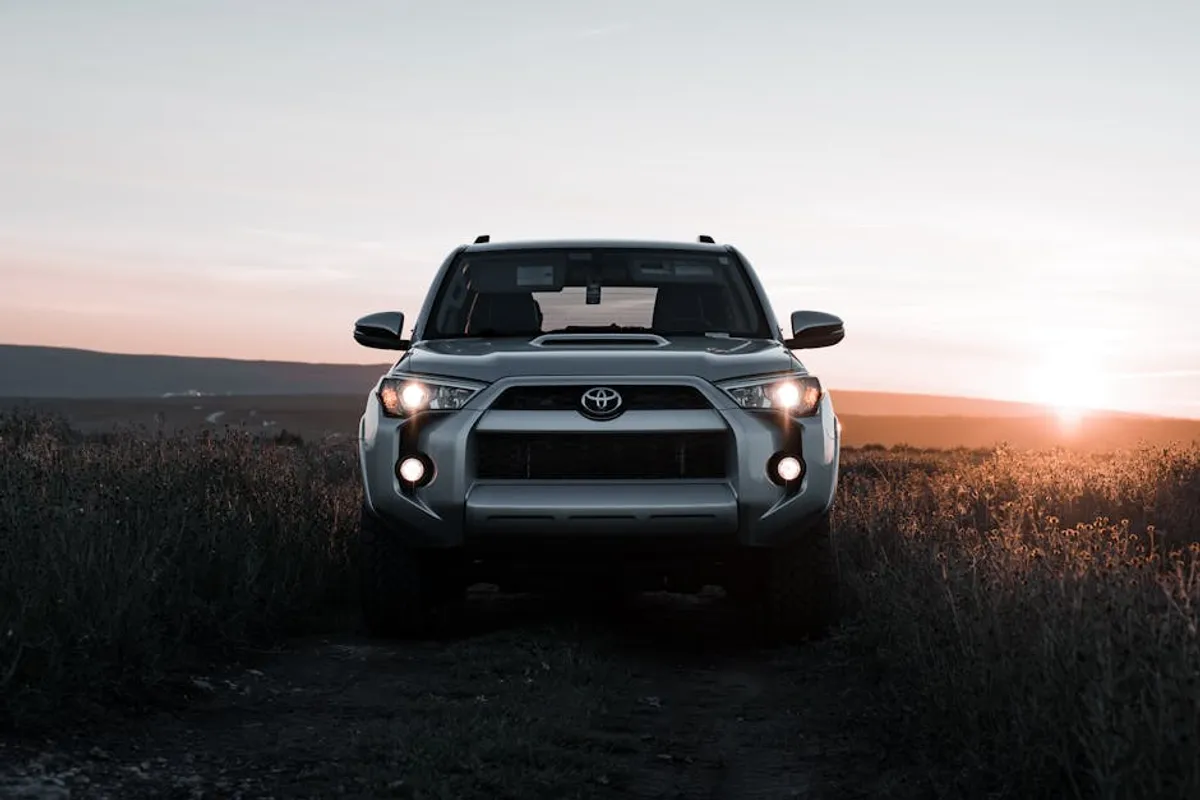
The Toyota 4Runner is engineered as a traditional, body-on-frame SUV, a design choice that underpins its durability and off-road competence. Its enclosed cabin provides secure, weather-protected storage and passenger seating, typically accommodating five to seven individuals depending on the configuration. The vehicle's dimensions make it more maneuverable on narrow trails or in urban environments compared to a full-size truck. Its design emphasizes ground clearance, approach/departure angles, and robust suspension for challenging terrain.
Best for: Off-road enthusiasts, families needing enclosed cargo and occasional third-row seating, buyers prioritizing long-term reliability and high resale value over cutting-edge technology or maximum towing.
Ram 1500: Pickup Truck Focus
The Ram 1500 is a full-size pickup truck, characterized by its separate cab and open cargo bed. This design is optimized for hauling bulky items, construction materials, or recreational gear that may not fit or be suitable for an enclosed space. Its larger footprint and typically longer wheelbase contribute to stability when towing heavy loads. Ram trucks often feature more sophisticated coil-spring rear suspensions (or optional air suspension) compared to traditional leaf springs, which enhances ride comfort, especially when unladen.
Best for: Individuals or businesses requiring substantial towing and hauling capabilities, those needing an open bed for cargo, buyers prioritizing a comfortable ride, modern cabin technology, and powerful engine options.
Performance and Capability Metrics
Powertrain and Driving Dynamics
The 4Runner typically comes equipped with a 4.0-liter V6 engine, paired with a five-speed automatic transmission. This powertrain is known for its durability and consistent performance, though it is not optimized for fuel efficiency or rapid acceleration. The driving experience is characterized by a high seating position, robust feel, and a suspension tuned for absorbing impacts on rough surfaces. On-road handling is competent but less car-like than many crossover SUVs.
The Ram 1500 offers a broader range of engine options, including a standard 3.6-liter V6 with eTorque mild-hybrid technology, and a more powerful 5.7-liter V8, also available with eTorque. These engines are typically paired with an eight-speed automatic transmission. The eTorque system improves fuel economy and low-end torque. The Ram's larger engines deliver significantly more horsepower and torque, resulting in stronger acceleration and higher towing capacities. Its ride quality is often praised for its smoothness, attributed to its advanced rear suspension designs.
Towing and Hauling Capacity
This is a primary differentiator. The Toyota 4Runner's maximum towing capacity typically hovers around 5,000 pounds across all trims. This is adequate for small boats, ATVs, or compact utility trailers. Its enclosed cargo area offers versatility for gear that needs protection from elements or theft, but volume is finite.
Pro Tip: When evaluating towing capacity, always account for the Gross Combined Weight Rating (GCWR), which includes the weight of the vehicle, its passengers, cargo, and the trailer. Never rely solely on the maximum trailer weight, as vehicle payload (passengers and cargo in the truck) directly impacts how much you can safely tow. Overloading any component compromises safety and vehicle longevity.
The Ram 1500, depending on engine, cab configuration, and axle ratio, can tow up to 12,750 pounds. This capacity makes it suitable for larger travel trailers, horse trailers, or substantial construction equipment. Its open bed configurations (e.g., 5'7" or 6'4") provide flexibility for oversized or dirty cargo that would be impractical for an SUV interior. The optional RamBox cargo management system integrated into the bed rails offers secure, lockable storage.
Off-Road Prowess
The 4Runner, particularly in its TRD Off-Road and TRD Pro trims, is a highly capable off-roader. Features like a locking rear differential, Multi-Terrain Select (MTS), Crawl Control, and higher ground clearance make it adept at navigating challenging trails, rocks, and uneven terrain. Its relatively shorter wheelbase aids in breakover angles.
The Ram 1500 also offers strong off-road packages, such as the Rebel and TRX trims. The Rebel includes features like a lifted suspension, all-terrain tires, and a locking rear differential. The TRX is an extreme performance off-roader. While capable, the Ram's larger size can be a limitation on tighter trails where the 4Runner's more compact dimensions offer an advantage. However, its powerful engines can provide momentum through deep sand or mud. However, its powerful engines can provide momentum through deep sand or mud, which is a point to consider when looking at the 2025 4Runner's capabilities.
Interior, Technology, and Daily Usability
Cabin Experience and Features
The 4Runner's interior emphasizes durability and straightforward functionality. While newer models have seen updates, the overall design remains somewhat traditional, with physical buttons and a focus on robust materials. Seating is comfortable for long trips, and the available third row is best suited for occasional use or smaller passengers. Storage solutions are practical but not overly sophisticated.
The Ram 1500's interior is consistently lauded for its modern design, premium materials, and spaciousness. Higher trims can rival luxury vehicles, featuring large vertical touchscreens (up to 12 inches), high-quality leather, and advanced climate control. The rear seats in crew cab configurations offer exceptional legroom. Storage is abundant, with various cubbies, under-seat compartments, and a large center console.
Safety and Driver-Assist Systems
Toyota 4Runner models from recent years include Toyota Safety Sense P (TSS-P) as standard. This suite typically incorporates Pre-Collision System with Pedestrian Detection, Lane Departure Alert, Automatic High Beams, and Dynamic Radar Cruise Control. While effective, it represents an earlier generation of driver-assist technologies.
The Ram 1500 offers a more comprehensive and often more advanced array of safety and driver-assist features. Available options include adaptive cruise control with stop and go, blind-spot monitoring with rear cross-path detection, lane-keep assist, parallel and perpendicular park assist, and a 360-degree surround-view camera system. These systems often provide more sophisticated functionality and a wider range of coverage.
Ownership Considerations
Fuel Efficiency
The 4Runner's 4.0-liter V6 and five-speed automatic transmission yield EPA estimates typically around 16 MPG city and 19 MPG highway for 4WD models. This is generally lower than many contemporary SUVs and trucks, reflecting its older powertrain technology.
Ram 1500 fuel economy varies significantly by engine. The 3.6-liter V6 with eTorque offers estimates around 20 MPG city and 25 MPG highway (2WD). The 5.7-liter V8 with eTorque typically achieves around 18 MPG city and 23 MPG highway (2WD). These figures can be more competitive, especially for the V6, but heavy towing or aggressive driving will reduce real-world results.
Resale Value and Longevity
- Toyota 4Runner: Consistently ranks among vehicles with the highest resale value in the market. Its reputation for bulletproof reliability and minimal depreciation makes it a strong financial hold. Many 4Runners remain operational for hundreds of thousands of miles with proper maintenance.
- Ram 1500: Resale values are competitive within the full-size truck segment but generally do not match the 4Runner's exceptional retention. Longevity is good for modern trucks, but the complexity of some advanced features might introduce more long-term maintenance considerations than the simpler 4Runner.
Making Your Selection: Key Differentiators
The fundamental choice hinges on your primary use case:
If your priority is:
- Off-road exploration and trail capability: The 4Runner, particularly TRD trims, offers a dedicated platform.
- Secure, enclosed cargo space and passenger capacity: The 4Runner's SUV body provides this inherently.
- Exceptional reliability and long-term value retention: The 4Runner has a proven track record.
- Maneuverability in tighter spaces: The 4Runner's smaller footprint is advantageous.
If your priority is:
- Maximum towing and hauling capacity: The Ram 1500's truck bed and higher ratings are unmatched.
- A comfortable, refined daily driving experience: The Ram 1500's interior and ride quality often surpass the 4Runner.
- Modern technology and advanced driver-assist features: The Ram 1500 generally offers a more contemporary suite.
- Powerful engine options and strong acceleration: The Ram 1500's V8 or eTorque V6 options deliver more power.
Frequently Asked Questions
Which vehicle is better for daily commuting?
The Ram 1500 generally offers a more comfortable and quieter ride, with more advanced infotainment and driver-assist features, making it a more refined daily commuter for many. The 4Runner's ride is more truck-like.
Can the 4Runner tow a small travel trailer?
Yes, the 4Runner's 5,000-pound towing capacity is sufficient for many smaller travel trailers, pop-up campers, and utility trailers. Always check the specific trailer's loaded weight against the 4Runner's rating.
Is the Ram 1500 good for off-roading?
Yes, especially with dedicated off-road packages like the Rebel or TRX. While its larger size can be a factor on very tight trails, it offers substantial capability for most off-road scenarios, including mud, sand, and moderate rock crawling.
Which vehicle holds its value better?
The Toyota 4Runner consistently demonstrates superior resale value retention compared to the Ram 1500, making it a stronger financial asset over time.