Deciding between the Ford Bronco and the Toyota 4Runner involves more than comparing specifications; it requires understanding distinct design philosophies and target buyer profiles. Both vehicles offer significant off-road capability and rugged aesthetics, yet they approach the adventure vehicle segment from different angles. The Bronco, a modern reinterpretation, emphasizes modularity, advanced technology, and a fresh platform. The 4Runner, conversely, leans on decades of proven reliability, a more traditional SUV architecture, and a reputation for long-term durability. Your choice hinges on prioritizing cutting-edge features and customization versus established robustness and a track record of minimal fuss. If you are interested in the newest iteration, you might want to see the 2025 4Runner guide covering the latest changes to Toyota's SUV.
Off-Road Prowess and Engineering
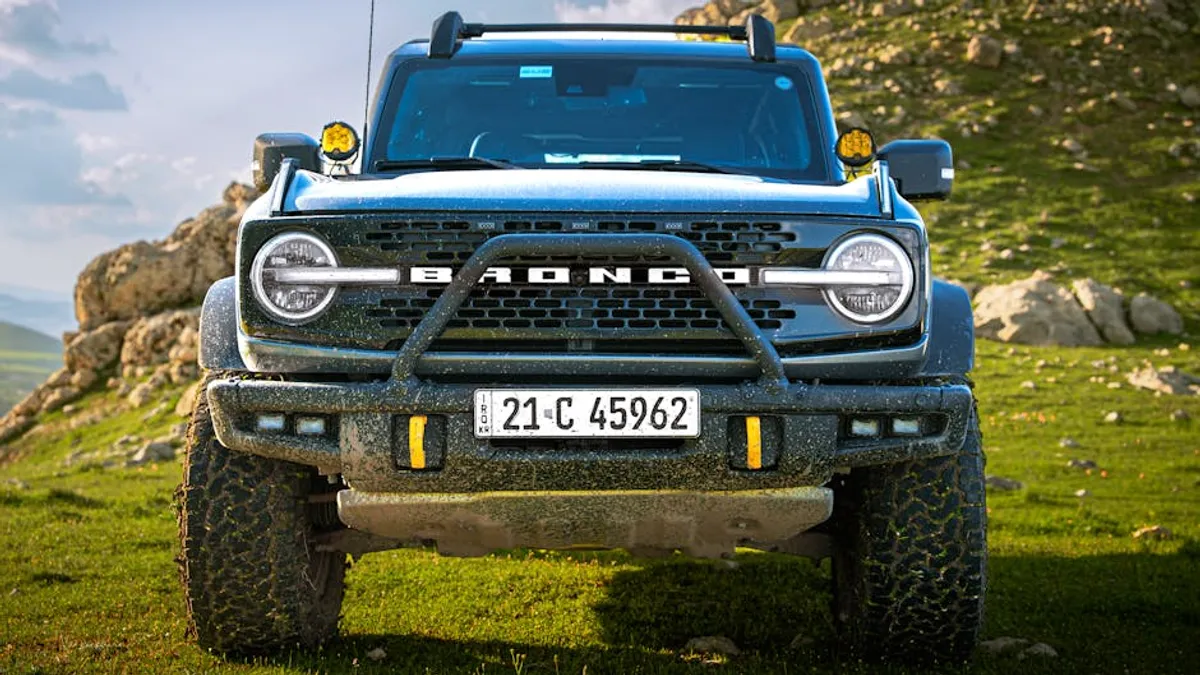
The core appeal of both the Bronco and 4Runner lies in their ability to tackle challenging terrain, but their engineering pathways diverge significantly. The Bronco employs an independent front suspension (IFS) across all trims, contributing to improved on-road comfort and high-speed stability over rough surfaces. Its G.O.A.T. (Goes Over Any Type of Terrain) Modes integrate various vehicle systems for specific conditions, while available features like the Sasquatch Package add 35-inch tires, beadlock-capable wheels, and lifted suspension directly from the factory. The Bronco's removable doors and roof panels offer an open-air experience unmatched by the 4Runner.
The Toyota 4Runner maintains a body-on-frame construction with a solid rear axle, a setup favored by many for its durability and articulation in extreme off-road scenarios. While its suspension technology might appear less advanced on paper compared to the Bronco's, systems like the Kinetic Dynamic Suspension System (KDSS) enhance wheel travel off-road while reducing body roll on pavement. Crawl Control and Multi-Terrain Select provide sophisticated traction management. The 4Runner's off-road reputation is built on its mechanical simplicity and ability to withstand sustained abuse, often requiring fewer complex electronic interventions.
- Bronco Off-Road Highlights:
- Independent Front Suspension (IFS)
- Available 35-inch tires and beadlock wheels (Sasquatch Package)
- Removable doors and roof
- G.O.A.T. Modes for terrain management
- Front and rear locking differentials
- 4Runner Off-Road Highlights:
- Solid Rear Axle
- Body-on-frame construction
- Kinetic Dynamic Suspension System (KDSS)
- Crawl Control and Multi-Terrain Select
- Available locking rear differential (TRD Off-Road/Pro)
On-Road Driving Dynamics and Comfort
For buyers who intend to use their vehicle as a daily driver, on-road manners are a critical consideration. The Bronco, with its independent front suspension, generally offers a more refined and compliant ride on paved roads. Steering can feel more direct, and body roll is typically better controlled than in the 4Runner. Its turbocharged engine options (2.3L EcoBoost four-cylinder and 2.7L EcoBoost V6) provide ample power, but fuel efficiency remains a secondary consideration for both vehicles in this class.
The 4Runner's traditional body-on-frame design and solid rear axle contribute to a more truck-like driving experience. The ride can be firmer, and steering may feel less precise compared to modern crossovers or the Bronco. Its naturally aspirated 4.0L V6 engine, paired with a five-speed automatic transmission, is known for its longevity and predictable power delivery, though it is less fuel-efficient and less powerful than the Bronco's offerings. The interior noise levels in the 4Runner are also generally higher at highway speeds.
Interior Design and Technology Integration
Inside, the differences are stark. The Bronco's interior is a contemporary blend of rugged utility and modern technology. It features a digital instrument cluster, a large central touchscreen (8-inch or 12-inch) with Ford's SYNC 4 infotainment system, and materials designed for easy cleaning after outdoor adventures. The layout is intuitive, with physical controls for essential functions. The modular design extends to the interior, with features like integrated accessory mounts.
The 4Runner's cabin, while functional, reflects its older design. The infotainment system, while updated in recent years to include Apple CarPlay and Android Auto, is less sophisticated than the Bronco's. Physical buttons and knobs are abundant and robust, emphasizing durability over digital sleekness. Interior materials are hard-wearing, prioritizing longevity and ease of maintenance over premium feel. While dated, many users appreciate its straightforward, no-nonsense approach.
Pro Tip: When evaluating the interior, consider your primary usage. If you value cutting-edge infotainment, digital displays, and a fresh, modular design for personalization, the Bronco is a stronger contender. If you prioritize robust physical controls, a proven durable cabin, and are less concerned with the latest tech interface, the 4Runner's interior will likely meet your needs.
Long-Term Ownership: Reliability and Resale
Toyota's reputation for reliability is a significant factor for many buyers, and the 4Runner exemplifies this. Its powertrain and core components are well-established, contributing to a strong track record of trouble-free ownership and exceptional resale value. The 4Runner often depreciates slower than many competitors, making it a sound financial choice in the long run.
The Bronco, being a relatively new vehicle platform, is still establishing its long-term reliability. While initial reports are generally positive, the complexity of its modern systems and the newness of its turbocharged engines mean its long-term durability and resale value are yet to be fully proven over many years. Early adopters may experience initial production quirks common with new models, but Ford has made efforts to address these.
Making Your Decision
Choosing between the Ford Bronco and Toyota 4Runner ultimately depends on your specific priorities and intended use. Both are highly capable off-roaders that command a strong enthusiast following.
Opt for the Ford Bronco if you prioritize:
- Modern design and technology
- An open-air driving experience with removable roof and doors
- A more refined on-road ride
- Extensive factory customization options and modularity
- More powerful and efficient engine options
Consider the Toyota 4Runner if you value:
- Unquestioned long-term reliability and durability
- Exceptional resale value
- A traditional, robust body-on-frame SUV feel
- Proven off-road capability with mechanical simplicity
- A straightforward, no-nonsense interior
Frequently Asked Questions
Which vehicle is better for daily driving?
The Ford Bronco generally offers a more comfortable and refined experience for daily driving due to its independent front suspension and more modern powertrain options, which contribute to better on-road manners and potentially better fuel economy than the 4Runner's older V6 engine and five-speed transmission.
Which has better aftermarket support for modifications?
Both vehicles have extensive aftermarket support. The Bronco, being newer and designed with modularity in mind, has quickly garnered a vast array of modification parts. The 4Runner, with its long production run, has a deeply established and diverse aftermarket community with parts for every conceivable upgrade.
Is the Toyota 4Runner more reliable than the Ford Bronco?
Historically, the Toyota 4Runner has an outstanding reputation for long-term reliability and durability, backed by decades of consumer data. The Ford Bronco is a newer vehicle, and while it incorporates modern engineering, its long-term reliability is still being established compared to the 4Runner's proven track record.
Which vehicle offers more cargo space?
The Toyota 4Runner typically offers more usable cargo space behind the second row, especially in its standard configuration, compared to the two-door or four-door Bronco. The 4Runner's traditional SUV shape provides a more expansive and upright cargo area.