Deciding between a Ford Bronco and a Porsche 911 involves more than comparing specifications; it's about aligning a vehicle with a specific lifestyle, driving priorities, and financial framework. These two vehicles represent divergent philosophies in automotive engineering and purpose. The Bronco, a rugged off-road utility vehicle, emphasizes adventure, customization, and capability beyond paved roads. The 911, conversely, is a precision-engineered sports car, focused on on-road performance, luxury, and an engaging driving experience. This guide dissects their core attributes to help clarify which model best suits distinct buyer profiles. If you're leaning towards an SUV, you might also find value in exploring other SUV comparisons to ensure the Bronco aligns with your broader needs.
Core Design and Engineering Philosophy
Ford Bronco: Rugged Utility and Off-Road Capability
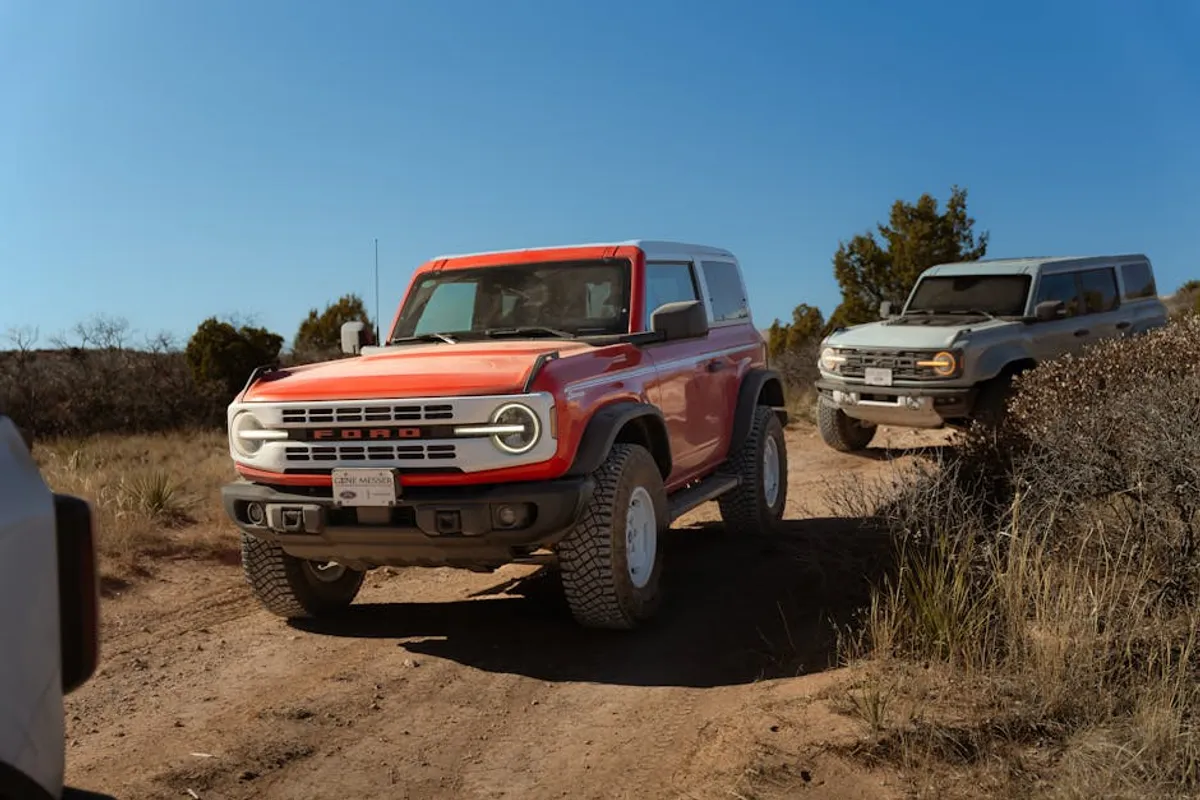
The Ford Bronco is built on a body-on-frame chassis, a foundational choice for durability and articulation in challenging terrain. Its design prioritizes modularity, allowing owners to remove doors and roof panels for an open-air experience, a feature directly supporting its adventure-oriented market. Suspension systems, including available HOSS (High-Performance Off-Road Stability Suspension) 3.0 with Fox internal bypass dampers, are engineered for high-speed desert running and rock crawling. Standard features like G.O.A.T. Modes (Goes Over Any Type of Terrain) electronically adjust powertrain, steering, and traction control settings for specific conditions such as sand, mud/ruts, or rock crawl. Engine options, primarily turbocharged EcoBoost units, deliver substantial torque at lower RPMs, essential for off-road maneuvering. The interior is designed for practicality, often featuring marine-grade vinyl seating and wash-out floors, acknowledging its intended use in dirty environments.
Porsche 911: Precision Performance and On-Road Dynamics
The Porsche 911 employs a unibody construction, optimized for structural rigidity and lightweight performance. Its iconic rear-engine, flat-six configuration contributes to a unique weight distribution that enhances traction and dynamic handling. Power delivery is precise, with engines revving to high RPMs and producing immediate throttle response, often paired with the rapid-shifting PDK (Porsche Doppelkupplung) dual-clutch transmission. Suspension systems, such as Porsche Active Suspension Management (PASM), continuously adjust damping forces to optimize ride comfort and handling dynamics, whether on a track or a winding road. Aerodynamics are meticulously integrated, from active rear spoilers to underbody paneling, to manage airflow and generate downforce at speed. The cabin is driver-centric, featuring premium materials, ergonomic controls, and advanced infotainment systems, reflecting its luxury sports car status.
Driving Experience and Intended Use
Bronco: Adventure and Versatility
The Bronco’s driving experience is characterized by its commanding view of the road, robust feel, and ability to traverse varied landscapes. On pavement, it offers a comfortable ride for a body-on-frame SUV, though its handling is geared towards stability rather than agile cornering. Its true capabilities emerge off-road, where features like disconnectable sway bars, locking differentials, and a low-range transfer case allow it to navigate extreme obstacles. It serves as a versatile platform for outdoor enthusiasts, capable of towing gear, carrying camping equipment, and serving as a base for exploration. For many, it functions as a daily driver that transitions seamlessly to weekend adventures, accommodating passengers and cargo with relative ease.
911: Exhilaration and Refined Speed
Driving a 911 is an immersive experience defined by direct steering feedback, immediate acceleration, and exceptional cornering grip. The engine's distinctive sound and the precise engagement of the gearbox contribute to a visceral connection between driver and machine. While capable of daily commuting, its primary appeal lies in spirited driving on open roads or track environments. Its performance envelope allows for rapid acceleration from 0-60 mph in under 4 seconds for many variants, with top speeds exceeding 180 mph. The refined interior, despite its performance focus, provides comfort for longer journeys, making it suitable for grand touring as well. The 911 is fundamentally a driver's car, engineered to deliver a thrilling and precise on-road experience.
Ownership Considerations: Cost, Customization, and Community
Price Point and Value Proposition
The Ford Bronco typically starts in the low $30,000s for base models, with higher-trim and specialized versions reaching into the $60,000s or more. Its value proposition centers on its rugged capability, modular design, and robust aftermarket support, offering a high degree of personalization and utility for its price. Depreciation can be moderate, especially for desirable trims and configurations, due to strong demand in the off-road market.
The Porsche 911 has a significantly higher entry point, typically starting around $120,000 and extending well into the $200,000s for performance variants. Its value is derived from its engineering excellence, brand prestige, performance capabilities, and often strong resale values, particularly for limited editions or well-maintained models. Depreciation can be slower than many luxury vehicles, with some specific models appreciating over time.
Customization and Aftermarket
The Bronco offers extensive factory options and a vast aftermarket for lift kits, larger tires, bumpers, winches, and lighting, enabling owners to tailor their vehicle for specific off-road disciplines or aesthetic preferences. This ecosystem fosters a strong sense of individuality and community around modification.
The 911’s customization is primarily through Porsche’s extensive options list, which allows for personalized interiors, paint-to-sample colors, and performance upgrades. The aftermarket exists but is more focused on performance enhancements (exhausts, suspension tuning) or bespoke aesthetic touches, rather than fundamental changes to the vehicle's core utility.
Community and Lifestyle Alignment
- Ford Bronco: Attracts a community focused on outdoor adventure, off-roading, camping, and overlanding. Owners often participate in organized trail rides, meetups, and leverage the vehicle for exploring natural landscapes. The culture emphasizes utility, camaraderie, and a rugged, active lifestyle.
- Porsche 911: Appeals to enthusiasts who value automotive performance, precision engineering, and the prestige associated with the brand. The community engages in track days, spirited drives, concours events, and appreciates the heritage and evolution of the 911 lineage. The culture centers on driving dynamics, luxury, and a passion for high-performance motoring.
Pro Tip: Before committing to either vehicle, meticulously evaluate your primary use case. If 80% of your driving involves challenging terrain or requires cargo versatility for outdoor gear, the Bronco's capabilities will be frequently utilized. If 80% of your driving is on paved roads and you prioritize dynamic handling, acceleration, and a refined driving experience, the 911 will deliver on its core promise. Misaligning the vehicle with your dominant use case leads to dissatisfaction.
Making Your Decision: Aligning Vehicle to Lifestyle
The choice between a Ford Bronco and a Porsche 911 is not about which vehicle is objectively "better," but which is demonstrably better suited to your specific needs and desires. If your weekends involve exploring remote trails, camping in challenging environments, or requiring a vehicle that can withstand rugged use and extensive modification, the Bronco offers an unmatched package of capability and community support. Its design is inherently practical for adventure and utility, providing a robust platform for diverse outdoor activities.
Conversely, if your passion lies in the art of driving, the thrill of precise cornering, rapid acceleration, and the experience of a meticulously engineered sports car, the 911 stands as a benchmark. It delivers a refined, high-performance experience that transforms every drive into an engaging event. The investment in a 911 is an investment in driving dynamics and a legacy of automotive excellence. Consider how each vehicle integrates into your daily routine, your recreational pursuits, and your long-term ownership expectations to make an informed decision.
Frequently Asked Questions
Can a Ford Bronco be used as a daily driver?
Yes, many Bronco owners use their vehicles for daily commuting. While its off-road suspension can lead to a firmer ride than some sedans, modern Broncos offer sufficient comfort, technology, and practicality for everyday tasks, especially in urban and suburban environments.
Is the Porsche 911 practical for long road trips?
The Porsche 911 can be practical for long road trips. Its comfortable seats, refined cabin, and capable infotainment system make extended journeys enjoyable. While cargo space is limited compared to an SUV, there is enough room for two people's luggage for a weekend or short trip, especially with the front trunk (frunk) and rear parcel shelf.
What are the main maintenance cost differences?
Generally, the Ford Bronco will have lower routine maintenance costs and parts prices compared to the Porsche 911. Porsche vehicles, due to their specialized engineering and premium components, typically incur higher service expenses, especially for specialized repairs or performance-related parts.
Do Ford Broncos hold their value well?
Ford Broncos, particularly popular trims and early models, have demonstrated strong resale value due to high demand, limited initial availability, and their reputation for ruggedness and customization potential. Their value retention is often competitive within the SUV segment.