The decision between a Ford Bronco and a Kei truck represents a fundamental divergence in vehicle purpose and owner priorities. While both are light trucks capable of off-road excursions, their design philosophies, operational costs, and practical applications differ dramatically. This guide dissects these differences, providing a direct comparison of performance, utility, cost, and legal considerations to help prospective buyers align their choice with specific needs, whether that involves tackling serious trails or managing a compact property. Understanding why small Japanese trucks are trending can provide valuable context for this comparison.
Performance and Capability
Ford Bronco: Trail Prowess and Highway Comfort
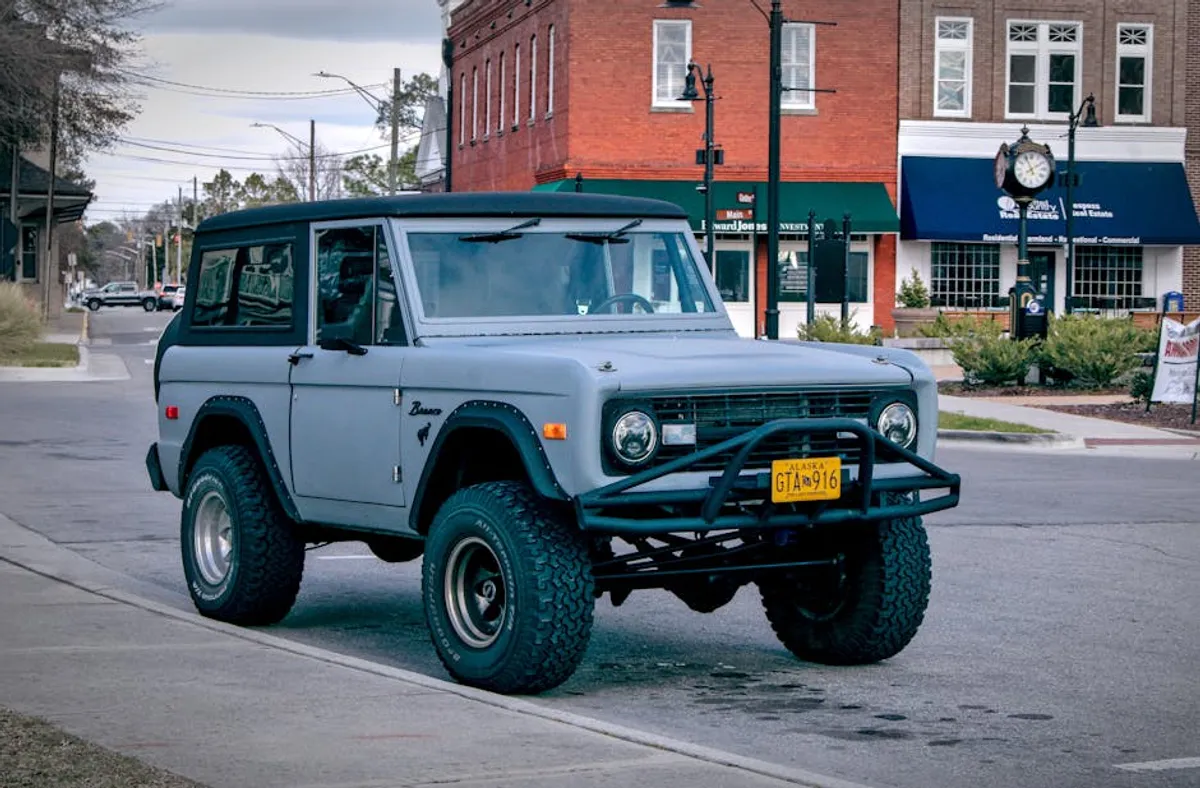
The Ford Bronco is engineered for robust off-road performance without sacrificing significant on-road comfort. Its body-on-frame construction, available G.O.A.T. Modes (Goes Over Any Type of Terrain), and advanced four-wheel-drive systems—including an available electronic locking front and rear differential—enable it to traverse challenging landscapes. Engine options, typically 2.3L EcoBoost I-4 or 2.7L EcoBoost V6, provide substantial horsepower and torque, translating to confident highway merging and towing capabilities. Ground clearance, often exceeding 11 inches on Sasquatch-equipped models, and impressive approach/departure angles are key differentiators for serious trail use. The Bronco is built for sustained speeds and long-distance travel, offering a stable and relatively quiet cabin at highway velocities.
Kei Truck: Agile Utility, Limited Speed
Kei trucks, originating from Japan's "Kei class" vehicle regulations, prioritize compactness, fuel efficiency, and maneuverability. Their small-displacement engines, typically 660cc, deliver modest horsepower, making them unsuitable for sustained highway speeds. Top speeds rarely exceed 60-70 mph, and acceleration is gradual. However, their lightweight construction and tight turning radius (often under 12 feet) make them exceptionally agile in confined spaces, such as narrow trails, construction sites, or agricultural properties. Many Kei trucks feature switchable 4x4 systems, sometimes with a low range, providing surprising traction in mud, snow, or uneven terrain, despite their lower power output. Their primary utility is in short-haul tasks, property management, and light commercial use where speed is secondary to access and payload.
Practicality and Usability
Bronco: Versatile Passenger and Cargo Solutions
The Bronco, available in two-door and four-door configurations, offers seating for four or five adults. Its interior is designed for durability and modern convenience, with features like washable rubberized flooring and marine-grade vinyl seats on some trims, alongside contemporary infotainment systems. Cargo space, particularly in the four-door model with the rear seats folded, is ample for camping gear, sports equipment, or groceries. Removable doors and roof panels enhance the open-air experience, a significant lifestyle appeal. The Bronco's larger footprint, however, can be a disadvantage in tight urban parking or extremely narrow trails.
Kei Truck: Compact Workhorse
Kei trucks are purpose-built for utility. Their compact dimensions (generally under 11 feet long and 5 feet wide) allow them to navigate spaces inaccessible to larger vehicles. The open bed, often with fold-down sides, provides a versatile platform for hauling tools, feed, lumber, or gardening supplies. Payload capacities typically range from 700 to 900 pounds. While seating is limited to two occupants, the cabin is functional, prioritizing visibility and simple controls. Air conditioning is common in newer models, but advanced creature comforts are minimal. Their small size makes them ideal for property maintenance, farm work, or as a light-duty campus vehicle. They are not designed for passenger comfort or long-distance travel.
Pro Tip: When considering a Kei truck, verify local and state registration laws. Many states have restrictions on their use on public roads, particularly highways, due to their limited speed and safety features. Some jurisdictions classify them as off-highway vehicles, limiting their utility to private property.
Cost of Ownership and Acquisition
Ford Bronco: Higher Initial and Running Costs
The Ford Bronco carries a significantly higher initial purchase price compared to most Kei trucks, especially new models. Fuel economy, while respectable for its class, is lower than a Kei truck due to its larger engines and weight. Maintenance costs are comparable to other modern trucks and SUVs, with parts readily available through Ford's extensive dealer network. Insurance premiums reflect its higher value and performance capabilities.
Kei Truck: Economical Acquisition and Operation
Kei trucks, particularly imported used models, are substantially more affordable to purchase, often starting under $10,000. Their small engines consume less fuel, leading to lower operating costs. Maintenance is generally straightforward, and parts, while sometimes requiring import, are typically inexpensive. Insurance can be lower due to their limited road use or classification as utility vehicles, though this varies by provider and state. However, potential buyers should factor in import fees, shipping, and any necessary modifications to meet local safety or registration standards.
Safety and Technology
Bronco: Modern Safety and Connectivity
The Ford Bronco incorporates contemporary safety features, including multiple airbags, anti-lock brakes, stability control, and advanced driver-assistance systems (ADAS) such as pre-collision assist with automatic emergency braking, blind-spot information system, and lane-keeping assist. Its robust chassis and larger mass also contribute to passive safety. Infotainment systems with large touchscreens, smartphone integration, and navigation are standard or available, providing a connected driving experience.
Kei Truck: Basic Safety, Minimal Tech
Kei trucks offer fundamental safety equipment, primarily seatbelts and basic braking systems. Airbags are rare in older models and less comprehensive in newer ones compared to modern full-size vehicles. Advanced driver-assistance features are generally absent. Technology is minimal, focusing on core vehicle functions. Buyers prioritizing advanced safety and connectivity will find Kei trucks lacking in these areas, reflecting their utilitarian design and intended use.
Making Your Decision
The choice between a Ford Bronco and a Kei truck hinges on primary use case, budget, and desired capabilities. There is little overlap in their optimal applications. A comparison of Bronco versus other SUVs might reveal similar lifestyle applications.
- Choose the Ford Bronco if:
- You require significant off-road capability for challenging trails and expeditions.
- You need a vehicle capable of highway speeds and long-distance travel.
- Passenger comfort and modern amenities are priorities.
- You value advanced safety features and infotainment technology.
- Your budget accommodates a higher initial purchase price and running costs.
- Choose a Kei Truck if:
- You need a highly maneuverable, compact vehicle for property maintenance, farm work, or light commercial use in confined spaces.
- Budget constraints prioritize low acquisition and operating costs.
- Highway travel is not a primary requirement, and most driving will be off-road or on local, low-speed roads.
- You prefer simplicity and ease of maintenance over advanced features.
- You understand and comply with local import and registration regulations.
Ultimately, the Bronco serves as a lifestyle vehicle blending adventure with daily usability, while the Kei truck is a specialized, economical tool for specific tasks. Evaluating your exact requirements against these distinct profiles will guide you to the appropriate purchase.
Frequently Asked Questions
Can a Kei truck be driven on public roads in the United States?
Legality varies by state. While many states permit Kei trucks on public roads, some impose restrictions on highway use or require specific modifications and classifications. Always check your local Department of Motor Vehicles (DMV) regulations.
How does the off-road capability of a Kei truck compare to a Ford Bronco?
A Kei truck's off-road capability is limited by its small engine and basic suspension, making it suitable for light trails, mud, and snow on private property. The Ford Bronco, with its powerful engines, advanced 4x4 systems, and robust suspension, is engineered for significantly more challenging and sustained off-road conditions.
What is the typical payload capacity of a Kei truck?
Most Kei trucks have a payload capacity ranging from 700 to 900 pounds, making them suitable for hauling tools, gardening supplies, or light construction materials. This is sufficient for many property management or small business needs.
Is the Ford Bronco a good daily driver?
Yes, the Ford Bronco is designed to function effectively as a daily driver, offering comfortable seating, modern conveniences, and capable on-road performance for commuting, errands, and family transport, in addition to its off-road prowess.