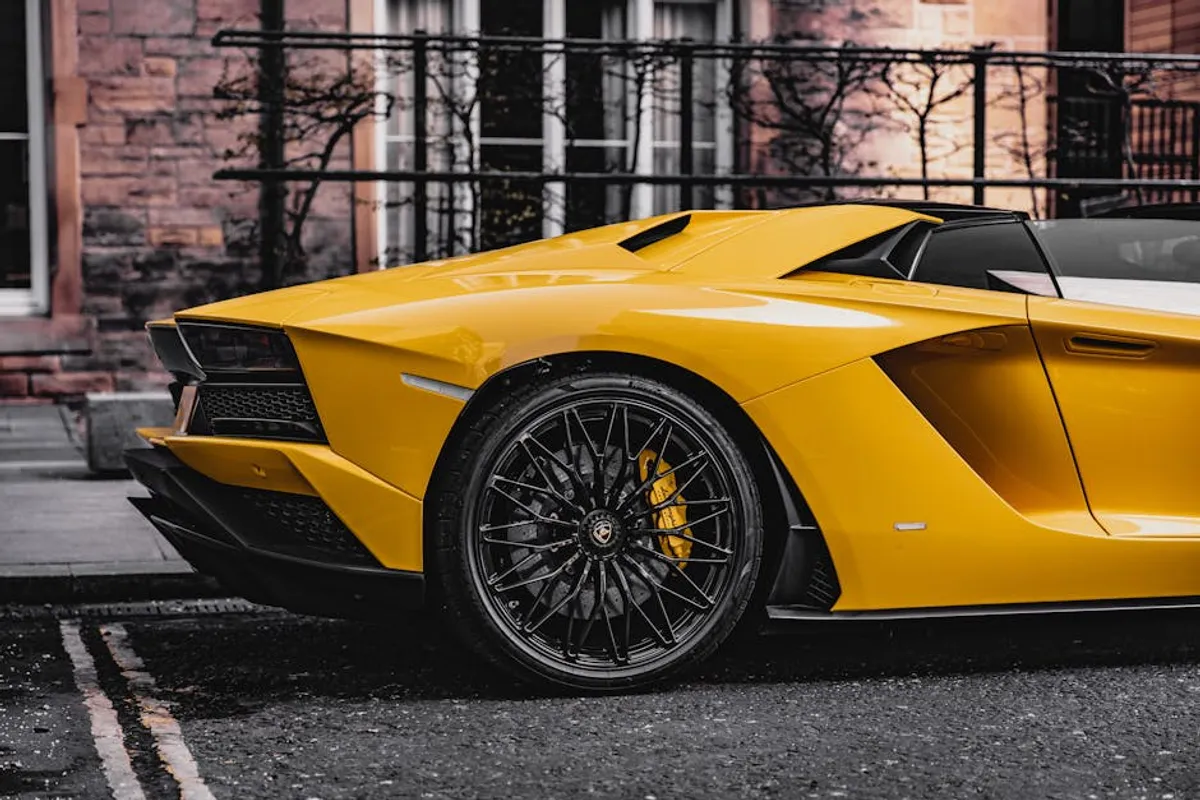
The pursuit of a Lamborghini often begins with a specific vision: a high-performance supercar with distinctive styling and an unmistakable engine note. While the brand is synonymous with exclusivity and significant investment, the term "cheapest" in this context refers to the most accessible entry points into ownership, whether through a current production model or a well-maintained example from the used market. Understanding these options requires distinguishing between initial purchase price and the total cost of ownership, which includes maintenance, insurance, and potential depreciation.
The Current Entry Point: New Lamborghini Huracán
For those seeking a brand-new Lamborghini directly from the factory, the Huracán line represents the most accessible offering. Its various iterations, such as the Huracán EVO, Huracán Tecnica, and Huracán STO, offer distinct performance profiles and styling cues. The base Huracán EVO RWD, for instance, typically starts around $210,000 to $220,000 before options, taxes, and destination charges. This price point positions it as the lowest MSRP among current production models, which also include the Urus SUV and the Revuelto hybrid supercar.
The Huracán delivers a naturally aspirated V10 engine, known for its auditory experience and linear power delivery. While its purchase price is the lowest for a new Lamborghini, buyers should account for extensive customization options, which can significantly elevate the final cost. These options, ranging from bespoke paint finishes to advanced driver-assistance systems and interior trims, often add tens of thousands of dollars to the base figure. The Huracán offers a contemporary Lamborghini experience with modern technology, a full factory warranty, and the latest design language.
Exploring the Used Market: The Most Accessible Lamborghini Models
The true entry point for many aspiring Lamborghini owners lies in the pre-owned market. Depreciation allows earlier models, particularly those from a generation or two ago, to become significantly more attainable than new vehicles. However, "cheapest" here is relative; these are still high-performance machines with corresponding maintenance demands. This means that a truly cheap Lamborghini requires a thorough understanding of ownership costs and maintenance beyond the initial purchase price.
Lamborghini Gallardo (V10)
The Gallardo, produced from 2003 to 2013, is frequently cited as the most financially accessible Lamborghini supercar. As the brand's first high-volume model, it saw over 14,000 units produced, contributing to a more robust used market. Prices for well-maintained examples typically range from $90,000 to $150,000, depending on year, mileage, condition, and specific variant (e.g., LP 550-2, LP 560-4, Superleggera). Early models, particularly those from 2004-2006, often represent the lowest price points.
Key Considerations:
- Engine: Naturally aspirated 5.0L or 5.2L V10, known for reliability relative to V12 counterparts.
- Transmission: Available with a 6-speed manual or an E-gear automated manual. Manuals are rarer and command a premium due to collector demand. E-gear units require specific maintenance and can be costly to repair if neglected.
- Maintenance: Routine service intervals are manageable, but major services (e.g., clutch replacement, specific E-gear actuator issues) can be expensive. Parts availability is generally good due to shared Audi R8 platform components.
- Performance: Still delivers compelling performance, with 0-60 mph times in the low 4-second to mid-3-second range, depending on the variant.
Early Lamborghini Huracán (V10)
As the successor to the Gallardo, early Huracán models (e.g., 2014-2016 LP 610-4) are now entering the more accessible end of the used market. These models typically range from $160,000 to $220,000, offering a more modern design, updated interior technology, and improved performance over the Gallardo.
Key Considerations:
- Engine: 5.2L naturally aspirated V10, shared with the Audi R8, known for robust performance.
- Transmission: 7-speed dual-clutch automatic (Lamborghini Doppia Frizione or LDF), offering faster and smoother shifts than the Gallardo's E-gear.
- Technology: Features a more advanced infotainment system and digital cockpit compared to the Gallardo.
- Maintenance: While newer, maintenance costs remain high. The dual-clutch transmission is generally reliable but complex.
Lamborghini Murciélago (V12)
The Murciélago, produced from 2001 to 2010, is a V12-powered supercar that, in its earliest forms, can sometimes be found in a similar price bracket to higher-end Gallardos, typically from $150,000 to $250,000. However, its V12 engine and older design present a different ownership proposition.
Key Considerations:
- Engine: Iconic 6.2L or 6.5L V12. This engine is more complex and typically more expensive to maintain than the V10.
- Maintenance: Significantly higher running costs. Major services, especially engine-out services common for clutch replacement or other deep engine work, can be very costly. Parts can be rarer and more expensive than for the Gallardo or Huracán.
- Driving Experience: A more raw, analog driving experience compared to newer models, appealing to purists.
Factors Driving Lamborghini Prices
The specific price of any used Lamborghini is influenced by several variables beyond its model year:
- Mileage: Lower mileage examples command higher prices due to less wear and tear.
- Condition: Impeccable cosmetic and mechanical condition, often verified by a pre-purchase inspection, justifies a premium.
- Maintenance History: A complete service record from authorized dealers or reputable specialists adds significant value and reduces future risk.
- Specification/Options: Desirable factory options, rare color combinations, or carbon fiber packages can increase value.
- Rarity/Collectibility: Limited-edition variants (e.g., Gallardo Superleggera, Murciélago SV) hold their value better or appreciate.
- Market Demand: Economic conditions and enthusiast trends can impact prices.
Pro Tip: When considering any "cheapest" Lamborghini, allocate a substantial budget beyond the purchase price for a thorough pre-purchase inspection (PPI) by a specialist shop. This inspection can uncover deferred maintenance or potential issues that could cost tens of thousands of dollars to rectify, fundamentally altering the "cheapest" equation.
Beyond the Purchase: Understanding Total Ownership Costs
The initial purchase price of a Lamborghini is only one component of ownership. The total cost encompasses several ongoing expenses:
- Insurance: High-performance, high-value vehicles incur significant insurance premiums.
- Maintenance: Routine service intervals are typically annually or every 7,500-10,000 miles, with costs ranging from $1,500 to $5,000+ per service, depending on the model and required work. Major services can exceed $10,000.
- Consumables: Tires, brakes, and fluids for performance vehicles are expensive. A set of performance tires can cost $1,500-$2,500.
- Fuel: V10 and V12 engines consume premium fuel at a high rate, especially under spirited driving.
- Repairs: Unexpected repairs, particularly for specialized components or electronics, can be very costly due to parts expense and specialized labor.
Making an Informed Decision
The "cheapest" Lamborghini is not merely the one with the lowest sticker price. It involves a holistic evaluation of initial cost, expected maintenance, and long-term ownership expenses. For those prioritizing a new vehicle with a warranty and modern features, the Huracán remains the entry point. For the most accessible pre-owned options, the Gallardo offers a compelling blend of classic supercar appeal and relatively manageable running costs, while early Huracán models provide a more contemporary experience at a higher used price point. The Murciélago offers V12 drama but demands a significantly larger maintenance budget. Regardless of the model, a comprehensive understanding of the financial commitment beyond the purchase price is essential for a sustainable and enjoyable ownership experience.
Frequently Asked Questions
What is the least expensive new Lamborghini model?
The Lamborghini Huracán line, specifically the Huracán EVO RWD, typically holds the position as the least expensive new model with a starting MSRP around $210,000-$220,000 before options and charges.
Which used Lamborghini model is generally considered the cheapest to buy?
The Lamborghini Gallardo, produced from 2003 to 2013, is widely regarded as the most accessible used Lamborghini, with prices for well-maintained examples often ranging from $90,000 to $150,000.
Are older Lamborghini models significantly cheaper to maintain than newer ones?
Generally, no. While the purchase price may be lower, older Lamborghini models, especially V12s like the Murciélago, can have higher maintenance costs due to rarer parts, more complex engine-out services, and specialized labor requirements.
What hidden costs should I consider when buying a "cheap" Lamborghini?
Beyond the purchase price, anticipate substantial costs for insurance, routine and major maintenance, performance tires, and potential unexpected repairs. A pre-purchase inspection is critical to identify deferred maintenance.