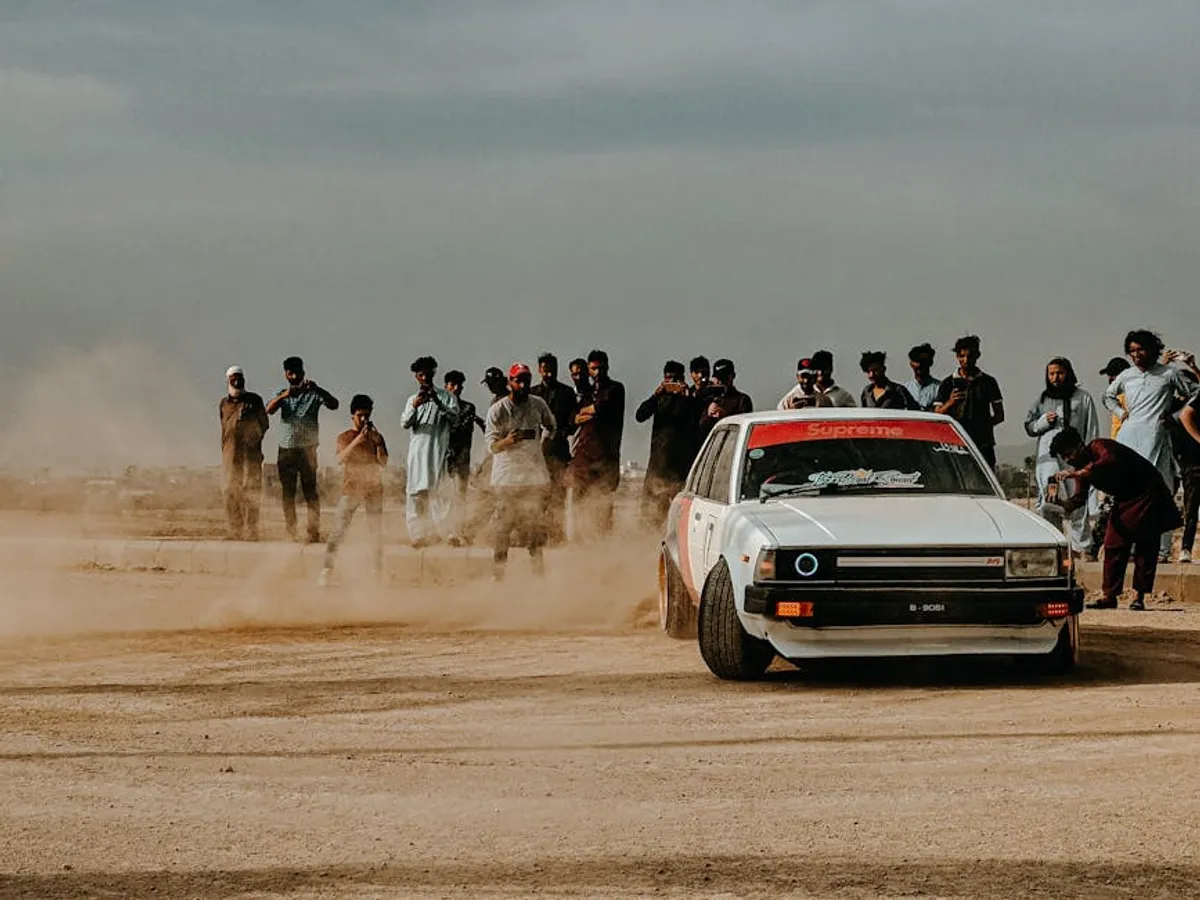
Deciding between a Toyota Chaser and an off-road truck involves evaluating fundamentally different automotive philosophies and intended uses. The Chaser, a Japanese Domestic Market (JDM) performance sedan, embodies a blend of comfort, style, and rear-wheel-drive dynamics, often associated with street performance and drift culture. In contrast, off-road trucks are engineered for utility, durability, and conquering challenging terrain, prioritizing capability over outright tarmac speed or refined ride quality. This comparison is not about which vehicle is inherently "better," but rather which aligns precisely with a buyer's specific needs, driving environment, and lifestyle. This comparison is not about which vehicle is inherently "better," but rather which aligns with your lifestyle, whether that's a performance sedan or capable off-road trucks.
Toyota Chaser: Performance and Street Presence
The Toyota Chaser, particularly popular in its JZX90 and JZX100 generations, is a four-door sedan recognized for its robust chassis and potent inline-six engine options. It offers a distinct driving experience centered on asphalt performance and a degree of luxury. Its appeal stems from its balance of daily usability and tuning potential.
Engine and Drivetrain Characteristics
Key to the Chaser's identity are its engine choices, primarily the 1JZ-GTE and 2JZ-GE. The 1JZ-GTE is a 2.5-liter twin-turbocharged or single-turbocharged inline-six, delivering significant horsepower and torque, making it highly responsive. The 2JZ-GE is a naturally aspirated 3.0-liter inline-six, known for its smoothness and reliability. Both engines are front-mounted, powering the rear wheels, which contributes to the Chaser's characteristic handling and appeal in performance driving circles. Manual transmission options were available, further enhancing driver engagement.
Handling and Ride Quality
Chasers typically feature a double-wishbone suspension system at both the front and rear, providing a comfortable yet capable ride for a sedan of its era. The chassis is designed for stability at speed and predictable handling, making it suitable for spirited driving on paved roads. Its lower center of gravity and car-like dimensions contribute to a more agile feel compared to taller, heavier trucks. The ride quality prioritizes passenger comfort and road-holding over rough-terrain articulation.
Practicality and Ownership Considerations
As a sedan, the Chaser offers a traditional trunk for cargo and seating for four to five occupants. Its ground clearance is typical for a passenger car, limiting its utility to paved roads or well-maintained gravel. Ownership often involves importing the vehicle, which can affect parts availability and service expertise outside of Japan. Maintenance costs can vary depending on the engine's condition and any modifications. Fuel economy, especially with the turbocharged variants, is generally moderate to low for a sedan.
Off-Road Trucks: Utility, Capability, and Durability
Off-road trucks, encompassing models like the Toyota Tacoma, Ford F-150 Raptor, or Jeep Gladiator, are purpose-built for challenging environments. Their design prioritizes ruggedness, ground clearance, and the ability to traverse uneven, unpaved surfaces, often coupled with significant hauling and towing capacities.
Powertrain and Off-Road Systems
Modern off-road trucks typically employ powerful V6 or V8 engines, often naturally aspirated or turbocharged, delivering substantial torque necessary for climbing and towing. Crucially, they feature advanced four-wheel-drive (4WD) or all-wheel-drive (AWD) systems, often with low-range gearing, locking differentials, and electronic traction control. These systems are designed to maximize traction and control over loose surfaces, steep inclines, and obstacles.
Chassis, Suspension, and Ground Clearance
A defining characteristic of most off-road trucks is their body-on-frame construction, providing a robust foundation for heavy loads and resisting torsional flex during extreme articulation. Suspension systems are typically heavy-duty, featuring long-travel shocks, often with solid axles or independent front suspensions designed for durability and ground clearance. High ground clearance is fundamental, allowing the vehicle to clear rocks, logs, and deep ruts without sustaining damage to underbody components. Larger, aggressive all-terrain or mud-terrain tires are standard or common upgrades.
Versatility and Hauling Capacity
The open bed of an off-road truck provides unparalleled cargo versatility, allowing for the transport of dirty gear, construction materials, or recreational equipment that would not fit or be suitable for a sedan's trunk. Towing capacities often range from several thousand to over ten thousand pounds, making them ideal for trailers, boats, or campers. This utility extends to recovery points, winches, and auxiliary lighting options, making them adaptable for various work or adventure scenarios.
Direct Comparison: Key Differentiators
- Driving Experience: The Chaser offers a lower, more connected-to-the-road feel, with precise steering and responsive acceleration on pavement. Off-road trucks provide a commanding high seating position, often with a more compliant, albeit sometimes less precise, ride on pavement, but excel in absorbing impacts off-road.
- Intended Use Cases:
- Toyota Chaser: Best for spirited street driving, comfortable commuting, JDM enthusiast events, and performance tuning for track or drift use.
- Off-Road Trucks: Best for towing, hauling, remote area access, overland travel, construction work, and navigating challenging weather conditions or unpaved trails.
- Maintenance and Modification: Chaser modifications often focus on engine performance, suspension tuning for road handling, and aesthetic enhancements. Off-road truck modifications center on increasing ground clearance, improving suspension articulation, adding protective armor, and enhancing recovery capabilities. Parts for imported Chasers can be specialized, while truck parts are generally more widely available, though heavy-duty off-road components can also be niche.
Pro Tip: Before committing, honestly assess your primary driving environment and cargo needs. If your daily commute involves well-maintained roads and occasional spirited driving, the Chaser's characteristics are more aligned. If your weekends involve hauling gear, towing, or accessing remote areas on unpaved roads, an off-road truck is the practical choice.
Making Your Decision: Aligning Vehicle with Lifestyle
The choice between a Toyota Chaser and an off-road truck is a direct reflection of your priorities. If you value a car with a rich JDM heritage, a focus on on-road performance, and a distinctive sedan profile, the Chaser delivers. It's a vehicle for enthusiasts who appreciate precise handling, engine tuning potential, and a comfortable interior for daily driving or weekend cruises on asphalt. It's a vehicle for enthusiasts who appreciate precise handling, engine tuning potential, and a comfortable interior for daily driving or weekend cruises on asphalt, unlike many cheap sports cars.
Conversely, if your lifestyle demands robust utility, the ability to navigate challenging terrain, significant towing or hauling capacity, and a vehicle built for resilience, an off-road truck is the clear winner. These vehicles are tools for adventure, work, and overcoming environmental obstacles, prioritizing capability and durability above all else. Consider the long-term costs of fuel, insurance, and maintenance for both types of vehicles, as these can differ significantly based on their specialized nature and the availability of parts or service expertise in your region.
Frequently Asked Questions
Q: Can a Toyota Chaser be modified for off-road use?
A: While theoretically possible to lift a Chaser, its unibody construction, lower suspension travel, and lack of 4WD or robust underbody protection make it fundamentally unsuitable and inefficient for serious off-road modification compared to a purpose-built truck.
Q: Are off-road trucks comfortable for daily driving?
A: Modern off-road trucks have significantly improved in comfort and on-road manners, but they typically still offer a firmer ride, higher center of gravity, and less agile handling than a performance sedan like the Chaser, particularly in urban environments.
Q: What are the main considerations for importing a Toyota Chaser?
A: Key considerations include legal import regulations, vehicle inspection requirements, sourcing parts, finding mechanics familiar with JDM vehicles, and potential challenges with insurance coverage, all of which can add to the total cost of ownership.
Q: Which vehicle type generally has higher fuel consumption?
A: Off-road trucks, due to their larger engines, heavier curb weight, and less aerodynamic profiles, generally have higher fuel consumption than a Toyota Chaser, especially the naturally aspirated sedan variants.