The decision between a Toyota 4Runner and a hybrid car represents a fundamental divergence in vehicle priorities. This is not a choice between two similar options, but rather between distinct engineering philosophies and intended use cases. The 4Runner is a body-on-frame, truck-based SUV engineered for rugged durability, off-road performance, and towing capability. Hybrid cars, conversely, are designed primarily for fuel efficiency, reduced emissions, and often a smoother, quieter urban or highway driving experience, integrating an electric motor with a gasoline engine to optimize consumption.
For buyers, understanding these core differences is essential. Your choice should align directly with your primary driving environment, anticipated vehicle demands, and long-term financial considerations, including fuel costs and maintenance. This guide outlines the specific attributes of each category to help clarify which vehicle best suits your operational requirements.
Toyota 4Runner: Purpose-Built for Durability and Terrain
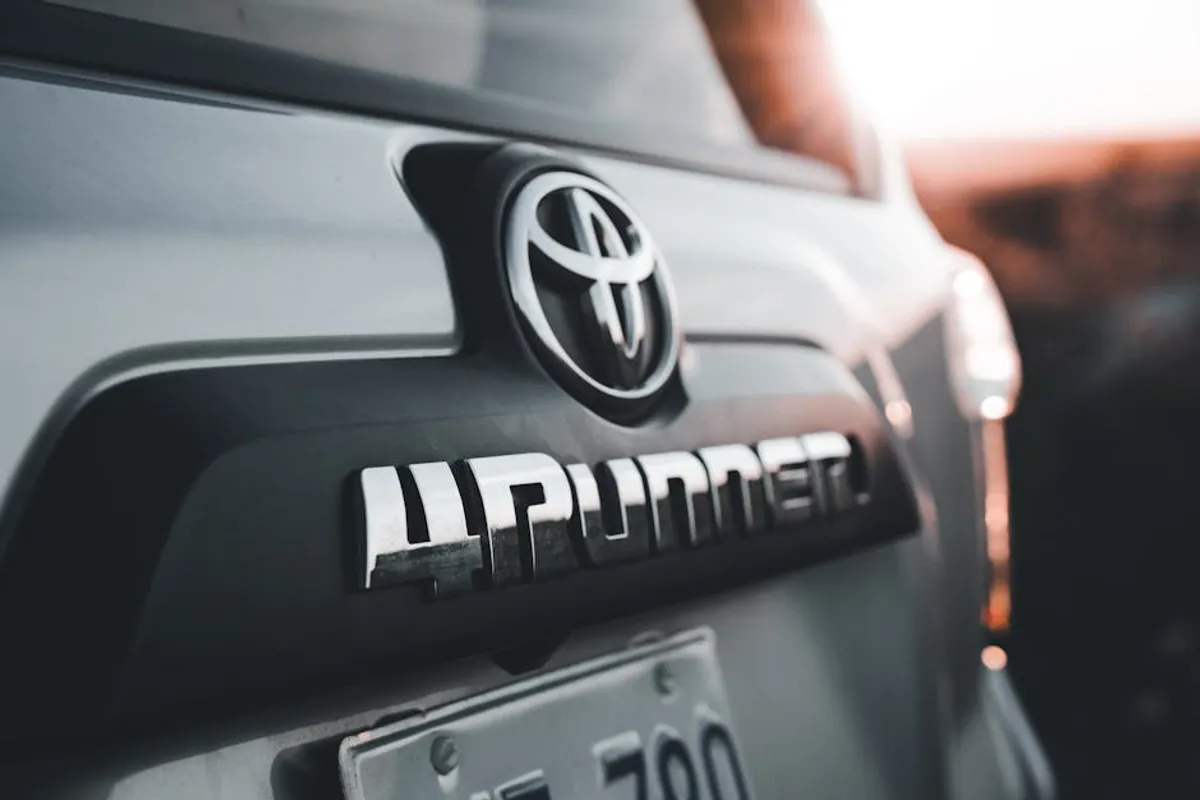
The Toyota 4Runner stands as one of the last traditional, body-on-frame SUVs in its class, a design choice that dictates much of its character and capability. This construction provides a robust platform, making it exceptionally durable for challenging conditions and demanding use. Its mechanical four-wheel-drive systems, often with low-range gearing and specialized off-road features like crawl control and multi-terrain select, equip it for significant off-pavement excursions.
- Off-Road Prowess: The 4Runner's high ground clearance, short overhangs, and rugged suspension are engineered for navigating uneven terrain, rocks, and mud. Its part-time 4WD system, available locking rear differential, and Kinetic Dynamic Suspension System (KDSS) on specific trims enhance wheel articulation and traction.
- Towing Capacity: With a towing capacity typically around 5,000 pounds, the 4Runner is suitable for pulling smaller boats, utility trailers, or light campers, a direct benefit of its truck-like chassis.
- Reliability and Resale Value: Toyota's reputation for long-term reliability is a significant factor, and the 4Runner consistently holds its value well in the used car market due to its robust construction and enduring demand.
However, these strengths come with trade-offs. The 4Runner's fuel economy is notably lower than modern crossovers and especially hybrids, often in the range of 16-19 MPG combined. Its ride quality on pavement, while improved over previous generations, remains firmer than unibody vehicles, and its interior technology, while functional, generally lags behind more recently updated competitors in terms of screen size and advanced features.
Hybrid Cars: Efficiency and Modernity
The category of hybrid cars encompasses a wide range of vehicles, from compact sedans to mid-size SUVs, all sharing the core principle of combining a gasoline engine with an electric motor and battery pack. This integration primarily aims to reduce fuel consumption and emissions, particularly in stop-and-go city driving where electric power can propel the vehicle at lower speeds or assist the engine.
- Fuel Economy: This is the paramount advantage of hybrid vehicles. Depending on the model, combined MPG figures can range from the high 30s to over 50 MPG, significantly reducing operating costs over the vehicle's lifespan.
- Reduced Emissions: By operating on electric power more frequently, especially in urban cycles, hybrids produce fewer tailpipe emissions than their conventional gasoline counterparts.
- Smooth Driving Experience: The electric motor provides instant torque, contributing to smooth acceleration from a stop and a generally quieter cabin, particularly at low speeds when the gasoline engine may be off.
- Advanced Technology: Many hybrid models integrate modern infotainment systems, advanced driver-assistance features, and digital dashboards as part of their contemporary design.
While hybrids offer compelling efficiency, they typically do not match the 4Runner's off-road capability or towing capacity. Most hybrids are unibody constructions, which prioritize on-road comfort and handling over extreme ruggedness. Their all-wheel-drive systems are generally designed for improved traction on slippery roads rather than serious off-pavement challenges.
Key Comparison Points for Your Decision
Fuel Economy and Environmental Impact
The most stark difference lies here. A hybrid car will consistently deliver superior fuel economy, often cutting fuel costs by 30-50% compared to a 4Runner over identical driving distances. This translates to lower operational expenses and a reduced carbon footprint. For drivers with high annual mileage, particularly in urban or highway settings, the long-term savings from a hybrid are substantial.
Performance and Capability
The 4Runner's V6 engine and body-on-frame chassis are engineered for demanding tasks. Its robust drivetrain and suspension geometry provide the resilience and ground clearance necessary for serious off-road trails. It can tow up to 5,000 lbs, making it a viable option for recreational towing. Hybrid cars, while often offering adequate power for daily driving, are generally not designed for heavy towing or challenging off-road conditions. Their AWD systems typically provide enhanced traction on paved or gravel roads but lack the articulation, low-range gearing, and chassis strength for rock crawling or deep mud.
Cost of Ownership
Initial purchase prices can vary widely within both categories. However, the 4Runner's higher fuel consumption will lead to higher ongoing fuel costs. Maintenance costs for both can be comparable, though hybrid systems introduce additional components like battery packs, which have long warranties but can be expensive to replace outside of warranty periods (though this is increasingly rare for modern hybrids). The 4Runner's strong resale value helps offset its higher fuel expenses, but overall, a hybrid typically offers a lower total cost of ownership over several years due to its fuel efficiency.
Interior and Technology
Hybrid vehicles generally offer more contemporary interior designs, larger touchscreens, and a wider array of standard and available advanced driver-assistance systems (ADAS). The 4Runner's interior emphasizes durability and straightforward functionality, with physical controls and a more traditional layout. While it includes modern essentials like Apple CarPlay and Android Auto, its overall technological integration is less advanced than many current hybrid offerings.
Driving Experience
The 4Runner provides a commanding driving position and a robust, truck-like feel. Its steering can feel heavier, and the ride is firmer, especially over rough pavement. Hybrid cars typically offer a smoother, quieter, and more car-like driving experience, with lighter steering and more refined suspension tuning, making them generally more comfortable for daily commuting and long highway trips.
Pro Tip: Before committing, realistically assess your actual driving needs. If your weekly routine involves primarily paved roads and occasional light snow, a hybrid's efficiency will provide tangible financial benefits. If regular excursions involve unpaved roads, heavy towing, or technical off-road trails, the 4Runner's specialized capabilities are non-negotiable.
Making Your Vehicle Decision
The choice between a Toyota 4Runner and a hybrid car boils down to prioritizing either rugged capability and traditional SUV values or modern efficiency and refined on-road performance. There is no universally "better" vehicle; only the one that aligns most closely with your specific requirements and lifestyle.
Best for: Toyota 4Runner
- Frequent off-road driving on challenging terrain.
- Regular towing of boats, trailers, or campers up to 5,000 lbs.
- A preference for a durable, body-on-frame construction and high ground clearance.
- Value for long-term reliability and strong resale in demanding conditions.
Best for: Hybrid Cars
- Prioritizing maximum fuel efficiency and lower operating costs.
- Primary use in urban environments or for daily commuting.
- A preference for a quieter, smoother, and more technologically advanced driving experience.
- Concern for reducing environmental impact through lower emissions.
Consider a detailed assessment of your average weekly mileage, the types of roads you traverse, and any specific needs like towing or cargo capacity. This granular evaluation will guide you to the vehicle that offers the most practical and financially sound solution for your individual circumstances.
Frequently Asked Questions
Can hybrid cars go off-road?
Many hybrid SUVs offer all-wheel drive systems that provide improved traction on slippery surfaces like snow or gravel. However, they are generally not designed for serious off-roading, lacking the ground clearance, robust suspension, and dedicated low-range gearing found in vehicles like the Toyota 4Runner.
Is the Toyota 4Runner expensive to maintain?
The Toyota 4Runner is known for its reliability, which often translates to lower unexpected repair costs. Routine maintenance costs are comparable to other large SUVs, but its higher fuel consumption will be a significant ongoing expense compared to a hybrid vehicle.
Do hybrid car batteries need to be replaced often?
Modern hybrid batteries are designed to last the lifetime of the vehicle, often coming with warranties of 8-10 years or 100,000-150,000 miles. Replacements are rare for most owners, and when necessary, they can be costly, but the technology has significantly improved durability.
Which vehicle has better resale value?
Both the Toyota 4Runner and many popular hybrid models from reputable brands tend to hold their value well. The 4Runner's strong demand in the used market due to its ruggedness contributes to excellent resale value. Hybrids, particularly those with strong efficiency ratings, also maintain good resale value due to their operational cost savings and environmental appeal.