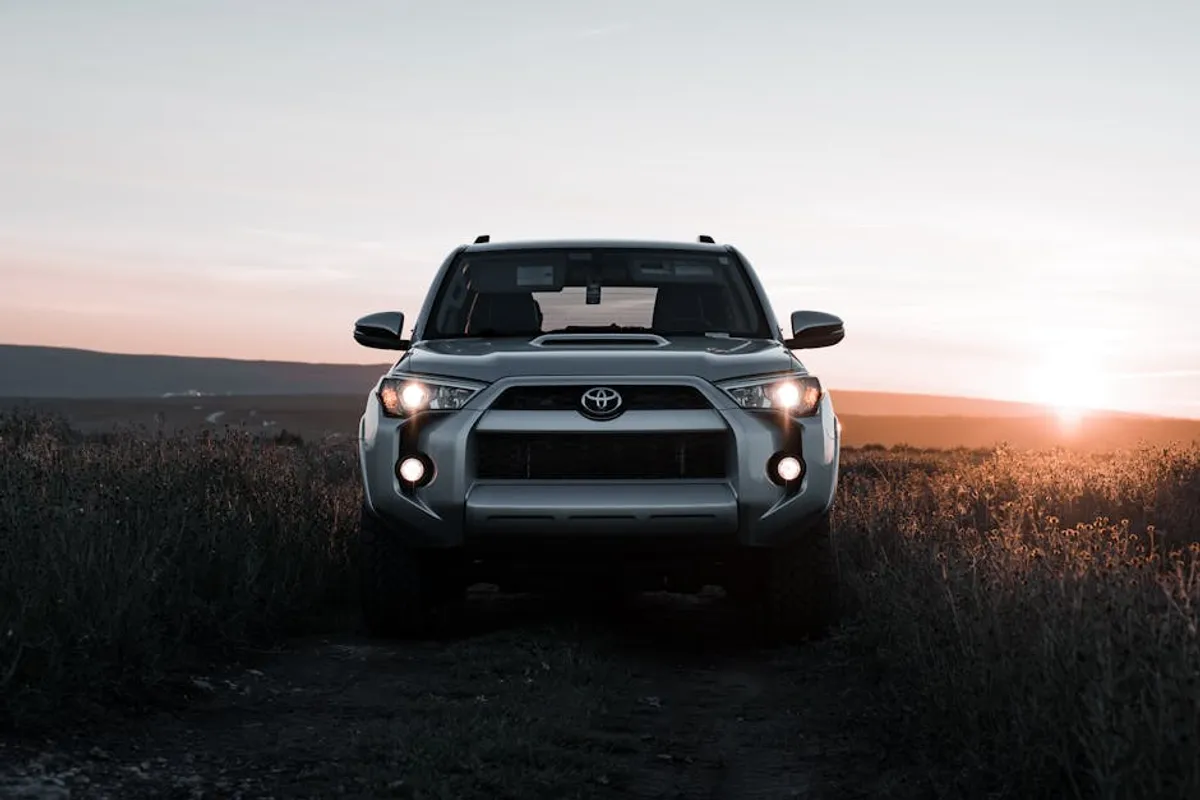
Deciding between a Toyota 4Runner and a Honda Acty is less about a direct head-to-head comparison and more about identifying vastly different vehicle purposes and user needs. These two vehicles exist on opposite ends of the automotive spectrum: one, a traditional, rugged mid-size SUV built for durability and off-road capability; the other, a compact, utilitarian kei truck or van designed for maximum efficiency in tight spaces. Understanding their core design, performance metrics, practical limitations, and ownership profiles is critical to making an informed purchase that aligns with your specific requirements.
Core Design Philosophies
The fundamental difference between the 4Runner and the Acty lies in their engineering and intended use. Each vehicle embodies distinct design principles that dictate its strengths and limitations.
Toyota 4Runner: Rugged Off-Road SUV
The Toyota 4Runner maintains a body-on-frame construction, a design choice increasingly rare in modern SUVs, which prioritizes durability and off-road resilience. This architecture allows for greater articulation and resistance to torsional flex when traversing uneven terrain, making it a staple for adventurers and those requiring a vehicle capable of handling challenging conditions. Its design emphasizes ground clearance, robust suspension components, and the capacity for heavy-duty use, including towing and extensive cargo hauling. The aesthetic is intentionally robust, reflecting its capability rather than aerodynamic efficiency or urban sleekness.
Honda Acty: Compact Kei Utility
The Honda Acty belongs to Japan's kei car class, characterized by strict regulations on size, engine displacement, and power output. Its cab-over design maximizes interior and cargo space within a minimal footprint, making it exceptionally maneuverable. The Acty is engineered for efficiency and utility in urban environments, agricultural settings, or light commercial use where space is at a premium. Its construction is lightweight and often features a simple, accessible engine layout for ease of maintenance. The design is purely functional, prioritizing cargo volume, a tight turning radius, and fuel economy over luxury or high-speed performance.
Powertrain and Performance Metrics
The engines and drivetrains of the 4Runner and Acty reflect their disparate design philosophies, leading to significant differences in power, capability, and fuel efficiency.
4Runner Engine and Drivetrain
The Toyota 4Runner typically features a 4.0-liter V6 engine, producing 270 horsepower and 278 lb-ft of torque. This power output, coupled with a five-speed automatic transmission, provides ample acceleration for highway driving and sufficient torque for off-road obstacles or towing. Most 4Runner models offer part-time 4WD with a low-range transfer case, and some trims include full-time 4WD, locking rear differentials, and advanced traction control systems. Its towing capacity often exceeds 5,000 pounds, making it suitable for trailers, boats, or small campers. Fuel economy figures are generally in the range of 16-19 MPG combined, reflecting its larger engine and robust construction.
Acty Engine and Drivetrain
The Honda Acty is powered by a small 660cc (0.66-liter) inline-3 cylinder engine, adhering to kei car regulations. Power output is typically around 45-53 horsepower and 35-45 lb-ft of torque. Transmissions are often a 5-speed manual, though automatics exist. Many Acty models offer selectable 4WD, providing traction in slippery conditions or on unpaved surfaces, but it is not designed for serious off-roading due to limited ground clearance and suspension travel. Its top speed is generally limited to around 70-80 mph, and acceleration is modest. Fuel economy is a strong point, often achieving 35-45 MPG, thanks to its small engine and light curb weight. Towing capacity is minimal, usually limited to a few hundred pounds.
Dimensions, Capacity, and Practicality
The physical size and interior configuration of these vehicles dictate their practical applications and everyday usability.
Interior and Cargo Space
The 4Runner offers a spacious interior, comfortably seating five passengers, with some configurations allowing for a third row. Cargo volume behind the second row typically measures around 47 cubic feet, expanding to over 89 cubic feet with the rear seats folded. This capacity accommodates large luggage, camping gear, or significant hauls. The cabin is designed for comfort on long journeys, with modern infotainment and climate control systems.
The Acty, by contrast, is a compact two-seater (in truck form) or a four-seater (in van form) with a much more constrained cabin. Its primary utility is the flatbed (truck) or open cargo area (van). The truck bed typically measures around 6.5 feet long and 4.5 feet wide, offering surprising utility for its size, capable of carrying pallets or farm equipment. The van variant provides a versatile, boxy cargo area. Passenger comfort is minimal, with basic seating and sparse amenities, reflecting its role as a workhorse rather than a passenger vehicle.
Maneuverability and Footprint
The 4Runner, with an overall length of around 190 inches and a turning radius of approximately 19-20 feet, requires more space for parking and maneuvering. Its larger size can be a disadvantage in congested urban areas or tight trails. Conversely, its substantial ground clearance (around 9-9.6 inches) is beneficial for clearing obstacles off-road.
The Acty's sub-134-inch length and extremely tight turning radius (often under 13 feet) make it exceptionally agile in confined spaces. It can navigate narrow streets, driveways, and park in spots inaccessible to most other vehicles. Its compact footprint is a significant advantage for urban deliveries, farm work, or navigating small properties. Ground clearance is typically lower, around 6-7 inches, limiting its off-road capability to less challenging terrain.
Safety Features and Modern Amenities
Modern safety standards and creature comforts have evolved significantly, creating a stark contrast between a contemporary SUV and an older-design utility vehicle.
4Runner Technology and Comfort
Newer 4Runner models come equipped with Toyota Safety Sense P (TSS-P), a suite of active safety features including Pre-Collision System with Pedestrian Detection, Lane Departure Alert, Automatic High Beams, and Dynamic Radar Cruise Control. Additionally, they feature multiple airbags, ABS, stability control, and a rearview camera as standard. The interior offers modern infotainment systems with touchscreen displays, smartphone integration (Apple CarPlay, Android Auto), premium audio options, and comfortable seating with power adjustments and heating/ventilation.
Acty Basic Utility
Most Honda Acty models available for import are older, often from the 1990s or early 2000s, and therefore lack modern safety features. Airbags, ABS, and stability control are rare or non-existent in many older models. Safety relies more on the driver's attentiveness and the vehicle's compact size and low speeds. Amenities are basic: manual windows, simple radio, and rudimentary climate control. The focus is purely on functionality and reliability, not advanced technology or comfort features found in contemporary vehicles.
Ownership Costs and Market Availability
The financial implications of purchasing and maintaining a 4Runner versus an Acty differ considerably, particularly due to their respective markets and ages.
Purchase Price and Fuel Efficiency
A new Toyota 4Runner starts in the low $40,000s, with higher trims exceeding $50,000. Used models retain value well, with prices varying based on age, mileage, and condition. Fuel costs are higher due to its lower MPG. Honda Acty models are typically imported used vehicles, with prices ranging from $5,000 to $15,000, depending on condition, year, and specific features. Their excellent fuel economy translates to lower running costs for fuel, making them economical for short-distance, low-speed applications.
Maintenance and Parts Accessibility
Toyota 4Runner parts are readily available through a vast dealership network and aftermarket suppliers, making maintenance straightforward and relatively affordable for a vehicle of its class. Its reputation for reliability often translates to lower long-term maintenance costs. For the Honda Acty, parts availability can be a challenge outside of Japan. While common wear items might be cross-referenced, specialized parts often require ordering from overseas, which can lead to longer wait times and higher shipping costs. Maintenance may also require mechanics familiar with imported kei vehicles.
Identifying Your Ideal Vehicle
The choice between these two vehicles hinges entirely on your primary intended use and priorities.
- Toyota 4Runner is best for:
- Off-road enthusiasts who tackle challenging trails.
- Families needing substantial passenger and cargo space for road trips or daily duties.
- Individuals requiring significant towing capacity.
- Buyers prioritizing modern safety features and creature comforts.
- Those seeking a vehicle with a strong resale value and readily available parts and service.
- Honda Acty is best for:
- Urban dwellers needing a highly maneuverable vehicle for tight spaces.
- Farmers or property owners requiring a compact utility vehicle for light hauling.
- Small businesses needing an economical and compact delivery vehicle.
- Enthusiasts seeking a unique, quirky, and fuel-efficient vehicle for niche uses.
- Buyers with a limited budget for purchase and running costs, and who are comfortable with potential import-related maintenance challenges.
Pro Tip: Before committing to a Honda Acty, research local regulations regarding kei vehicle registration and emissions. Some states or regions have restrictions on importing or registering vehicles that do not meet current safety or emissions standards, particularly if they are under 25 years old. Verify parts availability for your specific model year and engine code, as this can significantly impact long-term ownership.
Final Considerations for Buyers
Your decision should be driven by a clear assessment of your lifestyle, budget, and the specific tasks you need your vehicle to perform. If you require a robust, go-anywhere family hauler with modern amenities and comprehensive safety, the Toyota 4Runner is the appropriate choice. If your needs lean towards hyper-efficiency, extreme maneuverability, and compact utility for specialized tasks, and you're prepared for the nuances of owning an imported vehicle, the Honda Acty presents a compelling, albeit different, value proposition. Avoid purchasing either vehicle without a thorough understanding of its intended purpose and the compromises inherent in its design.
Frequently Asked Questions
Can a Honda Acty be used for highway driving?
While an Acty can technically drive on highways, its small engine and low power output mean it struggles to maintain highway speeds, especially on inclines or when fully loaded. It is best suited for speeds under 60 mph.
Is the Toyota 4Runner a good daily driver?
The 4Runner can serve as a daily driver, but its truck-like ride, lower fuel economy, and larger dimensions might be less comfortable or convenient for purely urban commuting compared to a car-based SUV. Its strengths lie in its versatility beyond daily pavement use.
What are the main challenges of owning an imported Honda Acty?
Key challenges include sourcing parts, finding mechanics familiar with kei vehicles, limited crash safety features, and potential difficulties with registration or insurance depending on your location. Performance is also limited compared to modern vehicles.
Does the Toyota 4Runner offer a comfortable ride for long trips?
The 4Runner's body-on-frame design provides a firm, truck-like ride, which some find less refined than unibody SUVs. However, its spacious interior and comfortable seating make it suitable for long trips, especially for those prioritizing ruggedness and capability over plush ride quality.