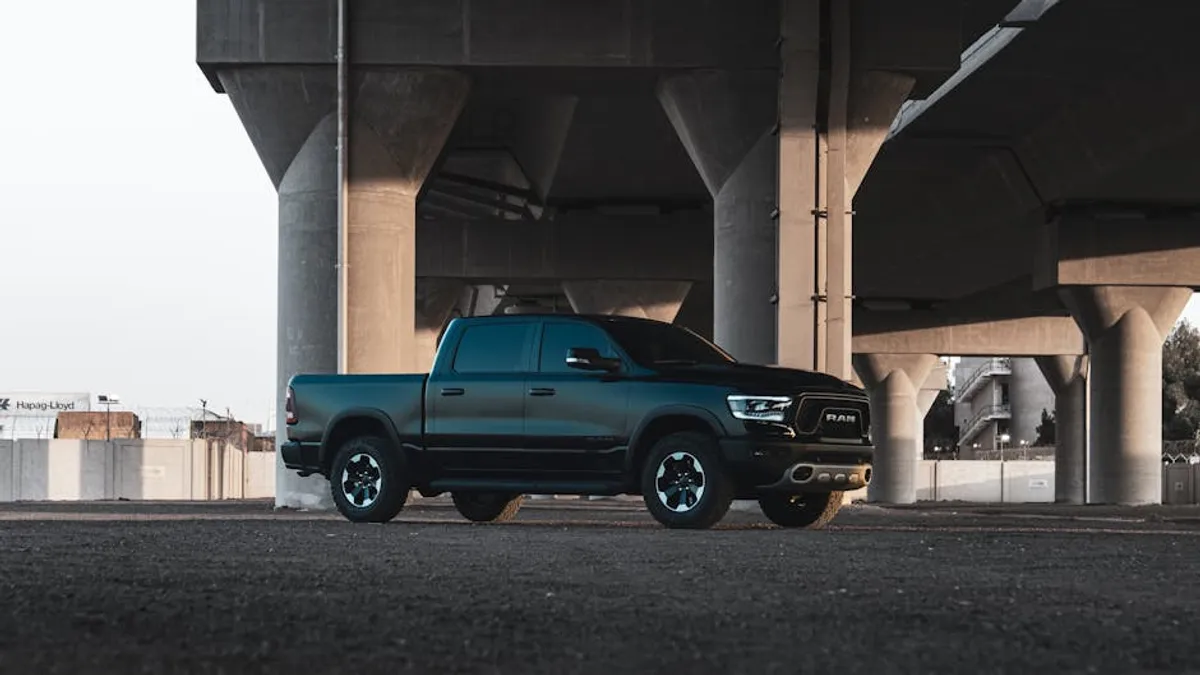
The decision between acquiring a Ram 1500 and a Kei truck represents a fundamental divergence in utility vehicle needs, driven by vastly different operational contexts and regulatory environments. This is not a choice between similar options; it's a selection between two distinct philosophies of vehicle design and purpose. A Ram 1500 is engineered for substantial payload, towing capacity, and long-haul comfort, catering to demands for power and expansive capability. Conversely, a Kei truck prioritizes ultra-compact dimensions, fuel efficiency, and maneuverability in confined spaces, often operating under specific legal frameworks that limit its application outside its primary market. Understanding the core distinctions in size, power, and intended use is crucial for any buyer evaluating these two vehicle types for commercial or personal application. This contrast highlights the unique appeal of Kei trucks and explains why small Japanese trucks are trending globally.
Core Differentiators: Size, Power, and Capability
The most immediate distinction lies in physical footprint and powertrain. A Ram 1500 is a full-size pickup, typically exceeding 20 feet in length and 6.5 feet in width, powered by engines ranging from V6 to V8 configurations, often with hybrid assist, generating significant horsepower and torque. This scale dictates its utility for heavy-duty tasks.
Kei trucks, adhering to strict Japanese Kei class regulations, are micro-trucks limited to a maximum length of 3.4 meters (11.2 feet), width of 1.48 meters (4.86 feet), and engine displacement of 660cc. Their engines produce modest horsepower, typically under 60 hp, and limited torque. This design makes them exceptionally nimble and fuel-efficient within their intended operating parameters.
Ram 1500: The Full-Size Workhorse
The Ram 1500 is designed for robust performance and versatility, making it a staple for tasks requiring considerable strength and space.
- Towing and Hauling Capacity: Modern Ram 1500 models offer towing capacities that can exceed 12,000 pounds and payloads over 2,000 pounds, depending on configuration. This makes them suitable for towing large trailers, construction equipment, or significant material loads.
- Engine Performance: Engine options provide substantial power for acceleration, highway cruising, and navigating challenging terrain, often with advanced transmission systems for optimized power delivery.
- Cabin Comfort and Technology: Interiors are typically spacious, offering advanced infotainment systems, driver-assist technologies, and premium materials, making them comfortable for long drives and daily commuting. Crew cab options provide ample seating for multiple passengers.
- Durability and Off-Road Capability: Built on a robust frame, the 1500 is engineered for durability. Specific trims (e.g., Rebel, TRX) offer enhanced suspension, tires, and four-wheel-drive systems for serious off-road excursions.
Best for: Construction contractors, tradespeople requiring heavy equipment transport, agricultural operations with large trailers, individuals needing significant cargo space or towing for recreational vehicles, and those prioritizing cabin comfort for daily driving.
Kei Truck: The Compact Utility Specialist
Kei trucks, while significantly smaller, excel in specific niche applications where their compact size and efficiency are advantageous.
- Maneuverability in Tight Spaces: Their diminutive dimensions allow them to navigate narrow urban alleys, crowded job sites, farms, or dense forest trails where larger vehicles cannot fit.
- Fuel Efficiency: The small 660cc engines consume less fuel than full-size trucks, resulting in lower operational costs, particularly for short-distance, low-speed tasks.
- Payload for Size: Despite their small stature, many Kei trucks can carry payloads between 700 to 1,000 pounds, which is substantial relative to their curb weight. This makes them effective for transporting tools, supplies, or produce over short distances.
- Cost-Effectiveness: Used Kei trucks, especially imported models, often have a lower purchase price than new or used full-size pickups. Maintenance costs are also generally lower due to simpler mechanical systems and smaller components.
Best for: Landscapers operating in residential areas, golf course maintenance, farm utility vehicles, campus maintenance, small urban delivery services, and off-road use on private property where road legality is not a primary concern.
Pro Tip: When considering a Kei truck for use outside of Japan, thoroughly research local vehicle import regulations, emissions standards, and road legality. Many jurisdictions classify imported Kei trucks as off-road vehicles or require significant modifications to meet safety and emissions compliance for public road use, severely limiting their practical application.
Operational Considerations and Road Legality
The operational environment dictates the suitability of each vehicle. A Ram 1500 is a standard road-legal vehicle globally, designed for highway speeds and meeting contemporary safety and emissions standards. Its larger size can be a disadvantage in dense urban environments or on narrow, unpaved paths, but its power and safety features are standard for modern transport.
Kei trucks, while road-legal in Japan, face significant hurdles elsewhere. In many markets, due to their smaller size, lack of modern safety features (e.g., advanced airbags, stability control), and differing emissions profiles, they may be restricted to off-road use, private property, or require special registration for limited public road access. Their top speeds are typically limited to 60-70 mph, making them unsuitable for highway travel in regions with higher speed limits. Crash safety standards are also a major concern when comparing them to full-size trucks.
Cost of Ownership Analysis
The total cost of ownership extends beyond the initial purchase price.
- Purchase Price: New Ram 1500 models range significantly based on trim and options, often starting in the mid-$30,000s and exceeding $70,000 for top trims. Used Kei trucks, particularly imported models, can be found for under $10,000, though specialized importers may charge more.
- Fuel Consumption: Ram 1500 models typically achieve fuel economy figures in the high teens to low twenties MPG. Kei trucks, with their small engines, can achieve significantly higher MPG, often in the 30s or 40s, making them more economical for frequent, short-distance operations.
- Insurance and Maintenance: Insurance costs for a Ram 1500 are generally higher due to its higher value and repair costs. Maintenance for both can vary; Ram 1500 parts are readily available, while Kei truck parts may require importation, potentially leading to delays and higher costs for specialized components, despite the simpler mechanics.
Making Your Selection
The choice between a Ram 1500 and a Kei truck is not about which vehicle is inherently "better," but which aligns precisely with the intended use case and operational requirements. If your work involves heavy towing, substantial payloads, long-distance travel, or requires a comfortable, technologically advanced cabin, the Ram 1500 is the appropriate tool. Its robust construction and power are non-negotiable for these demands.
However, if your primary need is for a highly maneuverable, fuel-efficient vehicle for light hauling in confined spaces, on private land, or for specific utility tasks where a compact footprint is critical, a Kei truck offers an economical and specialized solution. This is particularly true if you are operating within a legal framework that accommodates its unique characteristics.
Practical Considerations for Acquisition
Before committing to either vehicle, define your primary operational needs with precision. Document the maximum weight you need to tow or haul, the typical distances you will travel, the types of terrain you will encounter, and the specific dimensions of your operating environment. For Kei trucks, verify all local regulations regarding importation, registration, and road use. For a Ram 1500, consider the specific engine and drivetrain options that best match your power and efficiency requirements without over-specifying capabilities you won't use.
Frequently Asked Questions
What are the primary safety differences between a Ram 1500 and a Kei truck?
The Ram 1500 is built to modern safety standards, including multiple airbags, advanced driver-assist systems, and robust crash structures. Kei trucks, designed for different regulations, generally lack these advanced features, offering minimal passive safety measures, which makes them less suitable for high-speed public road use.
Can a Kei truck be used for highway driving?
While some Kei trucks can reach highway speeds, their small engines and light construction mean they are not designed for sustained high-speed highway travel. They lack the power for quick acceleration and the stability for comfortable long-distance highway journeys, and their safety profile is not comparable to full-size vehicles at such speeds.
How difficult is it to find parts and service for an imported Kei truck?
Finding parts and specialized service for imported Kei trucks can be challenging outside of Japan. While basic maintenance items might cross-reference with other small engines, specific body panels, drivetrain components, or unique electrical parts often require direct importation, leading to potential delays and higher costs.