The decision between a Nissan Silvia and a Porsche 911 represents a fundamental divergence in automotive philosophy, appealing to distinct buyer profiles with different priorities for performance, ownership experience, and brand identity. This isn't a matter of one being objectively "superior," but rather which vehicle aligns more closely with a buyer's driving aspirations, budget, and intended use. The Silvia typically caters to enthusiasts seeking a highly customizable, rear-wheel-drive platform for tuning and track-day engagement, often within a more accessible price bracket. The 911, conversely, targets buyers prioritizing precision engineering, iconic status, refined performance, and a premium ownership experience, accompanied by a significantly higher investment. The decision between a Nissan Silvia and a Porsche 911 represents a fundamental divergence in automotive philosophy, appealing to distinct buyer profiles with different priorities for performance, ownership experience, and brand identity, unlike a Porsche 911 versus Toyota Land Cruiser comparison.
Core Differentiators: Performance and Driving Dynamics
Nissan Silvia: Tuner's Canvas
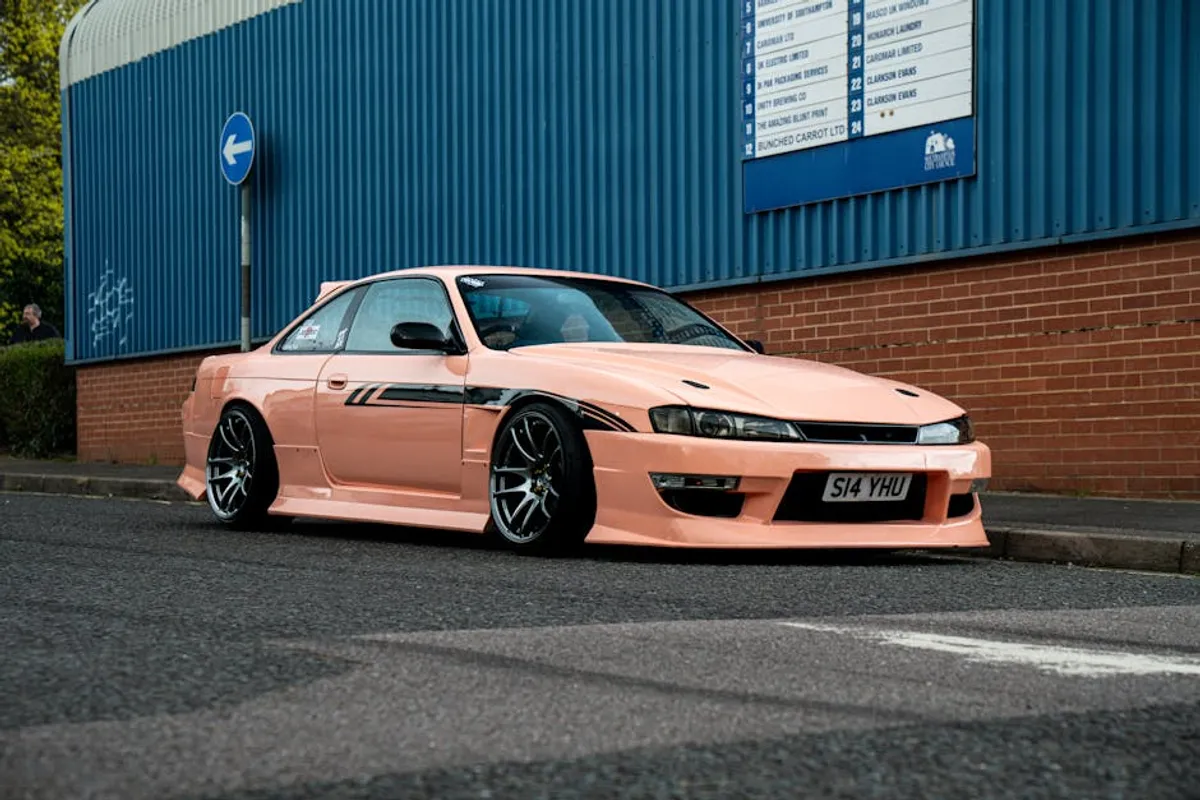
The Nissan Silvia, particularly models like the S13, S14, and S15, is revered for its robust, turbocharged inline-four engines (most notably the SR20DET) and a balanced, rear-wheel-drive chassis. Stock performance varied by generation and market, with the S15 Spec-R producing around 250 horsepower. However, the Silvia's true appeal lies in its aftermarket potential. Its engine is highly receptive to modifications, capable of reliably pushing well beyond stock figures with relatively common upgrades such as larger turbos, intercoolers, and ECU tuning. The suspension architecture, while competent from the factory, is also designed for extensive aftermarket adjustment, allowing owners to tailor handling characteristics for drift, grip, or street use. The driving experience is often described as raw and mechanical, providing direct feedback to the driver, which appeals to those who enjoy a hands-on, engaging connection with their vehicle.
Porsche 911: Engineering Precision
The Porsche 911, across its numerous generations and variants, is defined by its rear-engine, flat-six powertrain and a relentless pursuit of driving refinement. Even base Carrera models offer immediate, linear power delivery and precise handling, a result of decades of iterative engineering. Modern 911s, whether naturally aspirated or turbocharged, deliver horsepower figures ranging from the mid-300s to over 700 in GT2 RS variants. The chassis, while unconventional with its rear-engine layout, is meticulously tuned for exceptional grip, balance, and high-speed stability, often incorporating advanced electronic aids like Porsche Stability Management (PSM) and Porsche Torque Vectoring (PTV). The driving experience is characterized by its sophistication; the car responds with surgical accuracy, inspiring confidence at speed while maintaining a level of comfort suitable for longer journeys. Buyers here are investing in a highly developed, track-capable machine that also serves as a premium daily driver.
Ownership Experience: Costs and Community
Initial Investment and Long-Term Expenses
The financial commitment for a Silvia versus a 911 is a primary distinguishing factor. Used Silvia models, often imported, can range from $15,000 to $40,000 depending on condition, generation, and modifications. However, this initial saving often precedes significant investment in performance upgrades, engine rebuilds, or cosmetic restoration. Maintenance costs for a modified Silvia can be variable; while some parts are relatively inexpensive and DIY-friendly, specialized tuning or repairs on heavily modified engines can be costly. Insurance premiums might also be higher due to the car's association with tuning and aftermarket culture. Conversely, a used Porsche 911 typically starts above $50,000 for older generations and quickly escalates into six figures for newer or specialized models. Running costs are commensurately higher, with parts, specialized labor, and routine maintenance requiring a more substantial budget. While depreciation can be steep on some 911 models, others, particularly limited editions or sought-after air-cooled variants, have shown strong appreciation, potentially offsetting ownership costs for certain buyers.
Market Availability and Aftermarket Support
Accessing a Nissan Silvia often involves navigating the import market, particularly for models not originally sold in specific regions. This can mean higher import costs, stricter inspection requirements, and a limited pool of pristine, unmolested examples. The aftermarket support for Silvias is extensive, with a global network of parts manufacturers catering to every aspect of performance, from engine internals to suspension components and body kits. This robust ecosystem is a major draw for tuners, allowing for highly personalized builds. For the Porsche 911, availability is global, with a strong network of official dealerships and independent specialists. The aftermarket, while not as focused on extreme engine modification as the Silvia, offers a wide range of performance and aesthetic upgrades from reputable brands. Parts availability, both OEM and aftermarket, is generally excellent, reflecting Porsche's commitment to supporting its vehicles over their lifespan.
Image, Prestige, and PracticalityCultural Impact and Brand Perception
The Nissan Silvia holds a revered position in JDM (Japanese Domestic Market) and drift culture. It's an icon associated with grassroots motorsport, accessible performance, and a strong sense of community among enthusiasts who value customization and driver skill. Its image is one of an underdog capable of punching above its weight. The Porsche 911, by contrast, is a global automotive icon, synonymous with luxury, high performance, and engineering excellence. It carries significant brand prestige and is often seen as a status symbol, representing a culmination of automotive achievement. The perception of a 911 owner is typically one of discerning taste and an appreciation for heritage and performance.
Daily Usability Considerations
Both vehicles are 2+2 coupes, offering small rear seats suitable primarily for children or additional luggage. However, their practicality for daily use differs. The Silvia, especially older or heavily modified examples, can be less refined for daily commuting. Road noise, stiffer suspension, and less comfortable interiors are common trade-offs for its performance focus. Fuel economy varies but is generally not a primary concern for owners. The Porsche 911, particularly Carrera models, offers a surprising degree of daily usability. Its ride quality is firm but compliant, interiors are well-appointed and comfortable, and features like air conditioning, navigation, and advanced driver aids are standard on most modern iterations. The front trunk (frunk) provides usable storage, and the overall build quality contributes to a more refined daily driving experience.
- Nissan Silvia Suitability:
- Budget-conscious performance enthusiasts
- Drivers prioritizing customization and tuning
- Individuals engaged in drift or track-day events
- Collectors of JDM icons
- Those who enjoy a raw, mechanical driving feel
- Porsche 911 Suitability:
- Buyers seeking refined, high-performance sports cars
- Individuals valuing brand prestige and heritage
- Drivers who appreciate precision engineering and track capability out of the box
- Those desiring a premium daily driver with sports car credentials
- Buyers with a higher budget for purchase and maintenance
Making the Purchase Decision
The choice between a Nissan Silvia and a Porsche 911 ultimately hinges on personal priorities and resources. If your primary goal is to acquire a highly modifiable, rear-wheel-drive platform for performance tuning, track use, or drift events, and you are comfortable with the potential for ongoing project work and a more raw driving experience, the Silvia offers unparalleled value and a strong community. It's a car for the builder and the driver who wants to imprint their personality on their vehicle. If, however, your preference leans towards a meticulously engineered, high-performance sports car with iconic status, exceptional refinement, and a premium ownership experience, the 911 is the clear choice. It delivers a sophisticated driving dynamic, often with surprising daily usability, and represents a significant investment in automotive excellence. Evaluate your budget, mechanical aptitude, desired driving experience, and long-term goals to determine which of these distinct legends is the right fit for your garage. If your preference leans towards a meticulously engineered, high-performance sports car, newer Porsche 992 models offer a compelling blend of tradition and cutting-edge technology.
Frequently Asked Questions
What are the main performance differences between a stock Silvia and a stock 911?
A stock Nissan Silvia (e.g., S15 Spec-R) typically offers around 250 horsepower from its turbocharged inline-four, focusing on a lightweight, agile RWD platform. A stock Porsche 911 (e.g., base Carrera) usually starts in the mid-300 horsepower range with its flat-six engine, emphasizing refined power delivery, precision handling, and superior factory track capability.Is a Nissan Silvia a good daily driver?
A Nissan Silvia can function as a daily driver, especially in stock or mildly modified form, but it generally offers a less refined experience than many modern cars. Its raw nature, stiffer ride, and older interior amenities might be less comfortable for extended daily commuting compared to a Porsche 911.Which car is more expensive to maintain, a Silvia or a 911?
A Porsche 911 is significantly more expensive to maintain due to higher costs for OEM parts, specialized labor, and complex engineering. While a Silvia's initial purchase price is lower, heavily modified examples can incur substantial costs for performance parts, tuning, and potential engine rebuilds, though routine maintenance on stock components is generally more affordable.Do both cars hold their value well?
Value retention varies greatly by specific model, condition, and market. Highly sought-after Nissan Silvia models, particularly unmolested S15s, can appreciate, especially as JDM import regulations ease. Many Porsche 911 models, particularly limited editions, GT variants, or well-maintained air-cooled examples, have a strong track record of holding or increasing in value, while others may depreciate more predictably.