The Nissan Silvia, particularly its S-chassis generations, occupies a distinct niche in the used car market. Its appeal stems from a combination of lightweight rear-wheel-drive platforms, tunable engines, and a strong aftermarket. However, acquiring a used Silvia demands a precise understanding of its common issues, modification history, and import status. Prospective buyers must approach these vehicles with a detailed inspection strategy to mitigate risks associated with age, previous ownership, and potential abuse.
Key Silvia Generations and Their Characteristics
Understanding the specific attributes of each popular Silvia generation is crucial for targeted searching and realistic expectations.
S13 Generation (1988-1994)
The S13 chassis encompasses the Silvia, 180SX (hatchback), and 240SX (North American market). These models are often the most affordable entry point but also present the greatest challenges in terms of age and condition.
- Engines: Japanese market models typically feature the CA18DET (1.8L turbo) or the SR20DET (2.0L turbo), while North American 240SX models received the naturally aspirated KA24DE (2.4L). The SR20DET is generally preferred for its power potential and reliability.
- Common Issues: Significant rust on chassis rails, strut towers, and sills is prevalent. Interior plastics are often brittle and cracked, especially dashboards. Wiring harnesses can be degraded, leading to electrical gremlins. Suspension components, including bushings and ball joints, are almost certainly worn.
- Buyer Focus: Prioritize structural integrity and a clean chassis over engine condition, as mechanical issues are often more straightforward to address than extensive rust repair.
S14 Generation (1993-1998)
The S14 introduced a wider track and a slightly longer wheelbase than the S13, improving stability. It's often divided into "Zenki" (early, 1993-1996) and "Kouki" (late, 1996-1998) variants, distinguished by front-end styling.
- Engines: Primarily equipped with the SR20DET (turbo) or SR20DE (naturally aspirated) in Japan. The North American 240SX continued with the KA24DE.
- Common Issues: Rust can still be a concern, particularly in wheel arches and jacking points, though often less severe than S13s. Power steering racks are prone to leaks. Interior condition is generally better than S13s but still subject to wear, especially driver's seat bolsters.
- Buyer Focus: Look for evidence of consistent maintenance. The wider chassis often encouraged more aggressive driving, so inspect for accident repair and heavy modification.
S15 Generation (1999-2002)
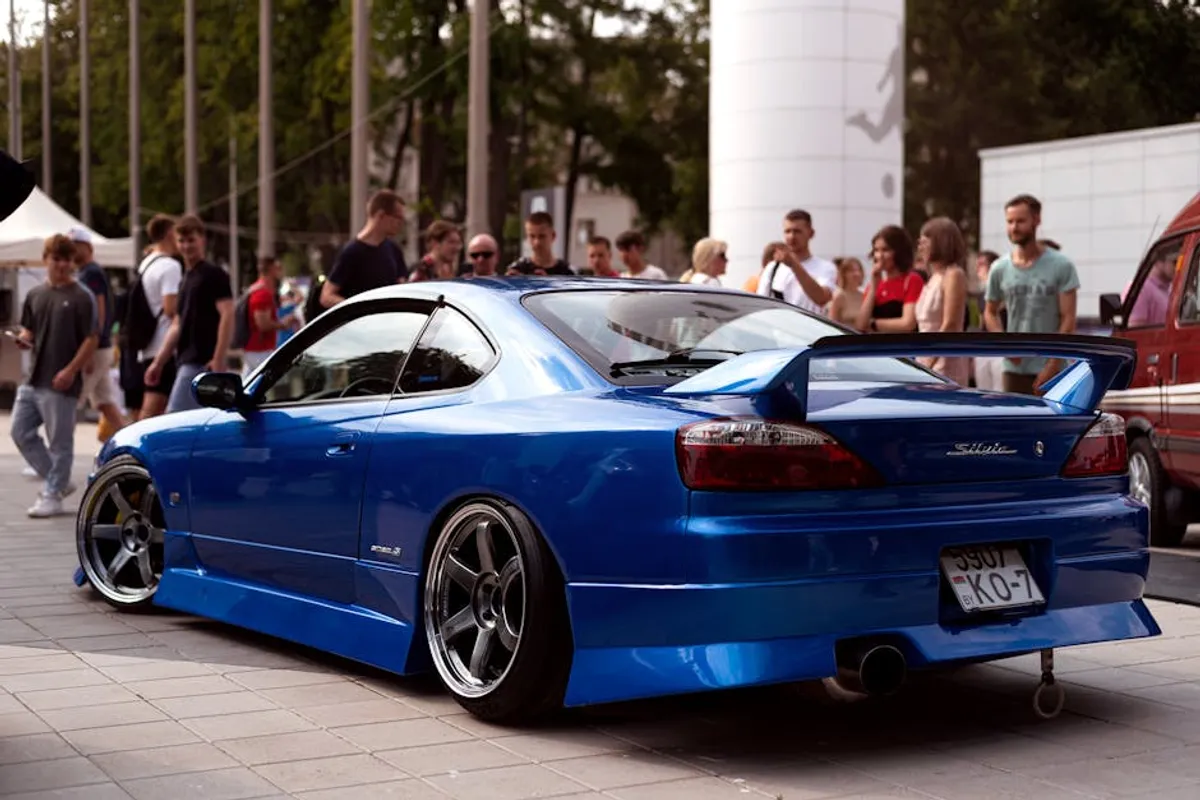
The S15 represents the final evolution of the Silvia, offering improved chassis rigidity, a six-speed manual transmission (Spec-R), and often a helical limited-slip differential. These are the most sought-after and expensive, often requiring direct import.
- Engines: Available with the SR20DET (250hp for Spec-R) or SR20DE (Spec-S).
- Common Issues: Due to their relative youth and higher value, S15s tend to be in better overall condition. However, import costs and parts availability can be significant. Check for accident history, as these cars are often driven hard. Specific S15-only parts can be difficult to source.
- Buyer Focus: Verify import documentation and compliance. Given the higher price point, demand a thorough pre-purchase inspection from a specialist familiar with JDM vehicles.
Critical Inspection Points for a Used Silvia
A comprehensive inspection is non-negotiable. Focus on areas commonly affected by age, performance driving, and modifications.
Chassis and Body Integrity
Inspect for rust extensively. Pay close attention to the front and rear strut towers, sills, jacking points, boot floor, and around the rear subframe mounting points. Panel gaps should be even; inconsistencies indicate accident repair. Check for overspray or mismatched paint, which suggests undisclosed bodywork.
Engine and Drivetrain Health
A compression test is mandatory for any SR20DET. Uneven compression or low readings indicate internal engine wear. Listen for unusual noises from the turbocharger, such as excessive whine or grinding, and check for shaft play. Look for oil leaks around the valve cover, turbo oil feed/drain lines, and rear main seal. Test the transmission for smooth shifts and listen for grinding or excessive play. A worn clutch will show high engagement points or slip under load. Check for differential noise, especially during cornering or acceleration.
Suspension, Steering, and Brakes
Examine all suspension bushings for cracks or tears. If aftermarket coilovers are fitted, check for leaks or seized adjustment collars. Test the power steering for leaks from the pump or rack. Look for excessive play in the steering wheel. Inspect brake rotors for warping and pads for even wear. If aftermarket brakes are installed, verify their quality and proper installation.
Interior and Electronics
Dashboard cracks are common, particularly in S13s. Check for bolster wear on seats, especially the driver's. Ensure all gauges function correctly. Test power windows, mirrors, and the air conditioning system. Aftermarket alarms or stereo installations can sometimes introduce electrical issues if not professionally installed.
Pro Tip: Many Silvias have been modified. While some modifications enhance performance, poorly executed or cheap modifications can severely compromise reliability and safety. Prioritize vehicles with a documented history of professional work or those that are largely stock. If a car has extensive modifications, ensure they are from reputable brands and installed correctly. Be wary of "drift tax" – inflated prices for cars that show signs of hard use or neglect, often under the guise of being "track-ready."
Understanding Modifications and Their Impact
Modifications are almost universal on Silvias. Distinguish between beneficial upgrades and potential liabilities.
- Engine Performance: ECU tunes, larger turbos, intercoolers, and exhaust systems can significantly increase power. Verify the quality of tuning and supporting modifications (e.g., fuel system, cooling).
- Suspension: Coilovers, adjustable arms, and stiffer bushings improve handling. Ensure these are not excessively stiff for street use and that components are not seized or leaking.
- Brakes: Upgraded calipers, rotors, and lines enhance stopping power. Check for proper balance and installation.
- Chassis Reinforcement: Roll cages or strut braces can improve rigidity but may indicate previous track use or accident damage.
Ownership Considerations and Costs
Beyond the purchase price, ongoing costs are a significant factor.
Parts Availability: While many common wear items are available, specific S15 parts or rare OEM components can be challenging and expensive to source, especially for imported models. Aftermarket support remains strong for performance parts.
Insurance: Due to their performance potential and common association with high-risk driving, insurance premiums for Silvias can be high, particularly for younger drivers.
Fuel Economy: Turbocharged models, especially when driven enthusiastically, will consume premium fuel at a higher rate. Expect 20-25 MPG (US) under mixed driving conditions for a stock SR20DET.
Maintenance: Regular oil changes, spark plug replacements, and fluid checks are critical, especially for modified engines. Factor in potential costs for turbo rebuilds, gasket replacements, and suspension overhauls.
Making an Informed Purchase
Purchasing a Nissan Silvia requires patience and diligence. Start by defining your budget, including funds for immediate maintenance and potential repairs. Prioritize vehicles with clear titles, minimal rust, and a traceable history. A pre-purchase inspection by a specialist familiar with these vehicles is the most effective way to identify hidden issues. Be prepared to walk away from vehicles that exhibit too many red flags; the market, while competitive, still offers viable options for those who search carefully.
Frequently Asked Questions
Are Nissan Silvias reliable?
When properly maintained and not heavily abused, the SR20DET engine can be reliable. However, these are older performance cars, and reliability is directly tied to previous maintenance, modification quality, and current condition. Expect to perform regular, proactive maintenance.
What is the difference between an S13, S14, and S15 Silvia?
The S13, S14, and S15 refer to different chassis codes and generations. The S13 (1988-1994) is the oldest, lightest, and most basic. The S14 (1993-1998) is wider and more refined. The S15 (1999-2002) is the newest, most powerful, and most advanced, often with a 6-speed manual and helical LSD.
How much does a used Nissan Silvia typically cost?
Prices vary significantly based on generation, condition, mileage, modifications, and import status. S13s can range from $8,000 to $20,000+, S14s from $15,000 to $30,000+, and S15s typically start from $30,000 and can exceed $50,000 for pristine or highly sought-after examples.
Is it expensive to maintain a Nissan Silvia?
Maintenance costs are higher than for a typical economy car due to the age of the vehicle, the performance nature of the engine, and the potential need for specialized parts (especially for imported models). Performance parts are readily available but can be costly. Insurance can also be a significant expense.