The decision between purchasing a Ford F-150 and a Lamborghini is not a typical apples-to-apples comparison. These vehicles occupy fundamentally different segments of the automotive market, designed for distinct purposes and catering to vastly different buyer priorities and financial realities. Understanding which vehicle aligns with your needs requires a clear assessment of your intended use, budget, lifestyle, and the value you place on utility versus outright performance and exclusivity. This guide dissects the core propositions of each vehicle to help clarify which automotive path best suits your objectives. To help you navigate the specific options available, a comprehensive Ford F-150 buying guide can illuminate the nuances of trims and engines.
Ford F-150: The Backbone of Utility and Versatility
The Ford F-150 stands as a definitive American workhorse, consistently ranking among the best-selling vehicles for its blend of capability, practicality, and adaptability. Its design prioritizes utility, making it a cornerstone for a wide range of tasks from demanding job sites to family road trips and outdoor adventures.
- Purpose-Built Capability: The F-150 excels in towing and hauling, with configurations capable of pulling over 14,000 pounds and carrying payloads exceeding 3,300 pounds. This capacity is critical for professionals transporting equipment, or for recreational users with boats, RVs, or trailers.
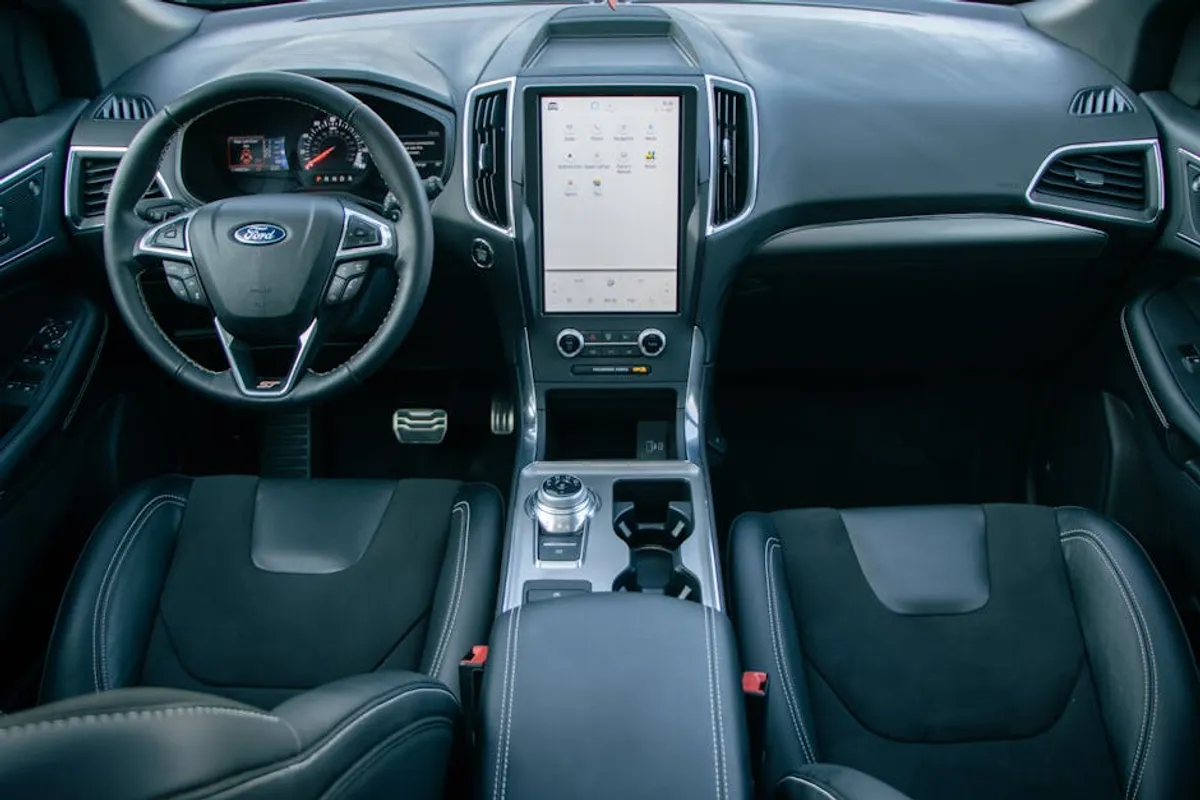
- Everyday Practicality: Beyond its work-oriented strengths, the F-150 offers comfortable seating for up to six passengers in its SuperCrew configurations. Modern iterations include advanced infotainment systems, driver-assist technologies, and luxurious interior trim levels that rival many SUVs, making it a viable daily driver for families.
- Powertrain Diversity: Ford offers a spectrum of engine options, including naturally aspirated V6s, EcoBoost turbocharged V6s, a robust V8, and the innovative PowerBoost hybrid. This allows buyers to select a powertrain optimized for fuel efficiency, raw power, or a balance of both, directly impacting long-term operational costs.
- Cost of Ownership: While initial purchase prices vary widely based on trim and options, the F-150 generally presents a more accessible entry point than a luxury sports car. Maintenance costs are typically managed through a vast network of service centers, and parts are widely available, contributing to lower overall running expenses. Insurance premiums, while dependent on specific models and driver history, are generally more favorable compared to high-performance exotics.
Best for: Individuals and businesses requiring significant towing and hauling capacity, those who frequently transport large items, outdoor enthusiasts, families needing spacious and durable transportation, and buyers prioritizing versatility and long-term utility.
Lamborghini: The Pinnacle of Performance and Exclusivity
A Lamborghini is not merely a mode of transport; it is a statement of engineering prowess, design artistry, and extreme performance. These vehicles are crafted for a specific, discerning clientele who prioritize raw speed, exotic aesthetics, and an unparalleled driving experience above all else.
- Uncompromised Performance: Lamborghini models are defined by their high-revving V10 and V12 engines, delivering blistering acceleration (0-60 mph in under 3 seconds for many models) and top speeds exceeding 200 mph. The focus is on dynamic handling, aerodynamic efficiency, and an visceral connection between driver and machine.
- Exotic Design and Craftsmanship: Every Lamborghini is a visual spectacle, characterized by sharp angles, aggressive lines, and a low-slung profile that instantly commands attention. Interiors are bespoke, featuring premium materials like Alcantara, carbon fiber, and fine leather, often customized to the owner's specifications.
- Exclusivity and Status: Limited production numbers and high price points ensure that owning a Lamborghini is an exclusive experience. It represents a significant investment in a luxury item that conveys status, passion for automotive excellence, and a unique lifestyle.
- Cost of Ownership: The barrier to entry for a new Lamborghini typically starts in the high six figures, often extending into seven figures for limited editions. Beyond the purchase price, specialized maintenance by certified technicians, high-performance tire replacements, and premium insurance policies contribute to substantial annual running costs. Fuel economy is a secondary consideration for buyers, with performance being the primary driver.
Best for: Ultra-high-net-worth individuals, performance driving enthusiasts, collectors, those seeking an exclusive luxury statement, and buyers who prioritize extreme speed, exotic design, and an emotional driving experience.
Pro Tip: Understanding True Cost of Ownership
When comparing any vehicle, especially those at opposite ends of the spectrum, look beyond the initial purchase price. Factor in insurance premiums, fuel costs, routine maintenance, specialized repairs, and potential depreciation. For a Ford F-150, these are generally predictable and manageable. For a Lamborghini, these costs escalate dramatically due to specialized parts, labor, and the vehicle's high-value nature, often requiring a dedicated budget for ownership. Understanding the financial commitment extends to researching the cheapest Lamborghini models and their associated ownership costs.
Key Differentiators and Decision Factors
The choice between an F-150 and a Lamborghini boils down to a fundamental misalignment of purpose and priority. There is virtually no overlap in their primary functions, making a direct 'better' assessment impossible without defining the buyer's context.
- Functionality vs. Emotion: The F-150 is a tool, a practical solution for transportation and work. The Lamborghini is an experience, an emotional purchase driven by passion for performance and design.
- Accessibility vs. Exclusivity: F-150s are widely available, mass-produced vehicles designed for broad appeal. Lamborghinis are niche products, hand-built in limited numbers for a select clientele.
- Investment vs. Asset: While both are assets, an F-150 is often an investment in productivity or family utility. A Lamborghini, while it can appreciate in rare cases, is primarily a luxury indulgence with high depreciation for most models.
- Daily Usability vs. Special Occasion: An F-150 can serve as a daily driver, work vehicle, and family transport simultaneously. A Lamborghini is generally reserved for recreational driving, track days, or special events due to its impracticality for common tasks and high-risk profile in urban environments.
Choosing Your Automotive Path
The question of which vehicle to buy is not about which is inherently superior, but which is superior for *your specific situation*. If your life demands utility, cargo capacity, towing prowess, and a robust vehicle capable of handling diverse tasks and environments, the Ford F-150 is the clear, logical choice. It delivers immense practical value and a proven track record of reliability within its segment.
Conversely, if your priority is an unparalleled driving thrill, a vehicle that serves as a high-performance art piece, and an expression of ultimate luxury and speed, and your financial capacity supports such an acquisition without compromise, then a Lamborghini fulfills that desire. It offers an experience that few other vehicles can match, albeit at a significantly higher total cost of ownership and with limited practical utility.
Frequently Asked Questions
Can a Ford F-150 be considered a luxury vehicle?
Modern Ford F-150s, particularly in their higher trim levels like the Platinum, Limited, or King Ranch, incorporate significant luxury features including premium leather, advanced infotainment systems, heated and ventilated seats, and sophisticated driver-assist technologies. While still a truck, these trims offer comfort and amenities that rival many luxury SUVs.
Is a Lamborghini practical for daily driving?
Generally, no. Lamborghinis are designed for performance, not practicality. Their low ground clearance, stiff suspensions, limited cargo space, and high-performance engines are not optimized for urban commuting, potholes, or routine errands. They are best suited for spirited drives on open roads or track use.
What is the primary cost difference beyond the purchase price?
Beyond the initial purchase, the most significant cost differences lie in maintenance, insurance, and specialized repairs. An F-150 benefits from mass-produced parts and widespread service networks, keeping these costs relatively low. A Lamborghini requires specialized, often proprietary, parts and highly skilled technicians, leading to substantially higher service expenses and insurance premiums due to its value and performance capabilities.
Which vehicle offers better resale value?
Resale value is complex and depends on many factors, including condition, mileage, market demand, and specific model year. Generally, high-volume vehicles like the F-150 see predictable depreciation but maintain strong demand. Exotic vehicles like Lamborghinis can depreciate significantly, but certain rare or limited-production models may appreciate over time, particularly if well-maintained and kept in original condition. For most models, the F-150 offers more stable, predictable depreciation.