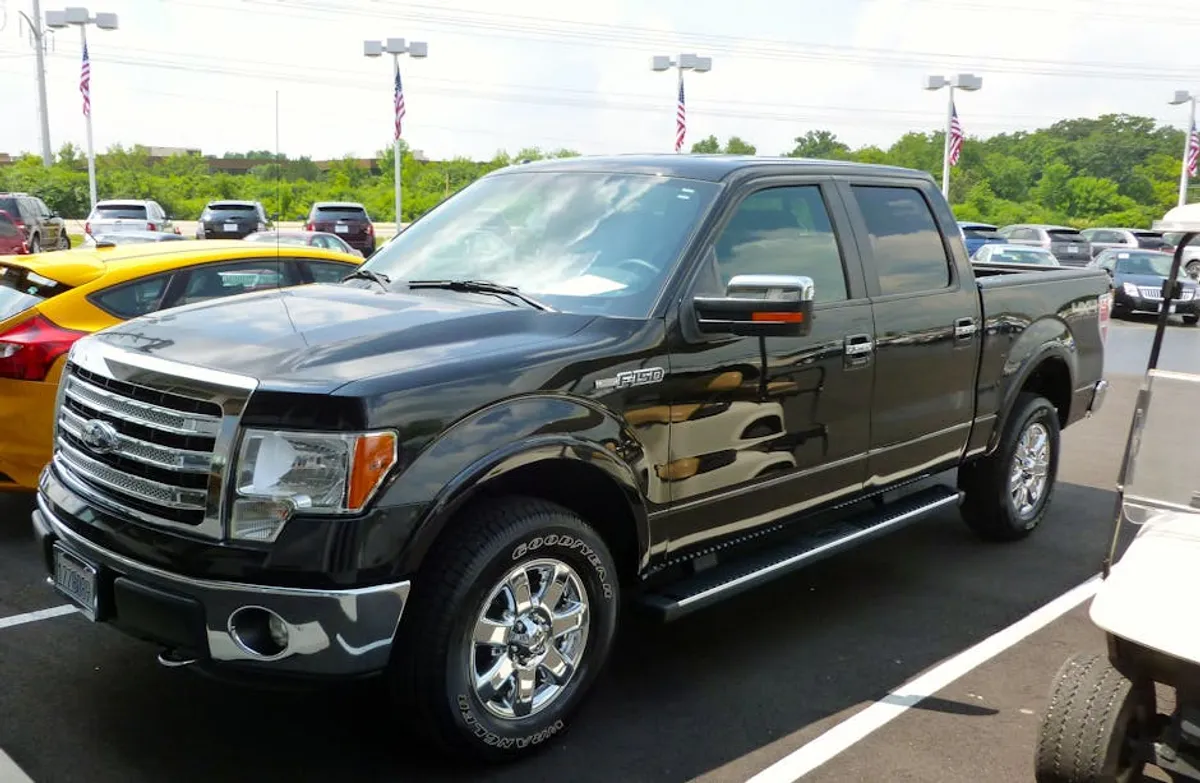
Deciding between a Ford F-150 and a Ford Bronco involves more than brand loyalty; it requires a precise assessment of intended use and lifestyle. Both vehicles carry the Ford badge and are built for capability, but their engineering and design priorities diverge significantly. The F-150, a full-size pickup, is engineered for utility, payload, and towing, serving as a workhorse or a family hauler with substantial cargo capacity. The Bronco, a mid-size SUV, is purpose-built for off-road adventure, featuring design elements that prioritize rugged terrain navigation and open-air experiences. Understanding these fundamental distinctions is crucial for making an informed purchase that aligns with your specific operational requirements and recreational pursuits.
Primary Design Intent and Use Cases
The F-150 is fundamentally a truck, designed around a body-on-frame chassis to support heavy-duty tasks. Its primary role involves transporting materials, towing trailers, and providing a versatile platform for various trades and personal utility needs. This design emphasizes durability, payload capacity, and the ability to integrate specialized equipment. Conversely, the Bronco is an adventure vehicle, also built on a body-on-frame platform but optimized for navigating challenging off-road environments. Its design prioritizes ground clearance, articulation, and approach/departure angles, with features like removable doors and roof panels enhancing the outdoor experience.
F-150: Utility and Versatility
The F-150 caters to a broad demographic, from contractors and farmers needing robust work vehicles to families seeking a capable daily driver with ample space and towing prowess. Its truck bed offers unmatched cargo flexibility, accommodating everything from construction supplies to recreational gear. The interior often blends work-ready durability with advanced infotainment and comfort features, making it suitable for long hauls and daily commutes alike. Multiple cab configurations (Regular Cab, SuperCab, SuperCrew) and bed lengths (5.5 ft, 6.5 ft, 8 ft) allow for precise customization based on specific utility requirements.
Bronco: Adventure and Off-Road Focus
The Bronco is aimed at enthusiasts who prioritize trail capability and an immersive outdoor experience. Its design DNA clearly harks back to its heritage as a rugged off-roader. Features like standard four-wheel drive, available locking differentials, and the G.O.A.T. (Goes Over Any Type of Terrain) Modes system underscore its specialized purpose. The modular design, allowing for easy removal of doors and roof sections, transforms the vehicle into an open-air adventurer, appealing to those who view their vehicle as a gateway to exploration rather than purely a tool for work.
Performance and Drivetrain Configurations
Both models offer a range of powerful engine options, but their application and typical drivetrain configurations differ based on their intended use.
F-150 Engine and Drivetrain
The F-150 provides a diverse powertrain lineup, emphasizing a balance of power, efficiency, and torque for towing and hauling. Options typically include:
- 2.7L EcoBoost V6
- 3.5L EcoBoost V6
- 5.0L Ti-VCT V8
- 3.5L PowerBoost Full Hybrid V6
- High-Output 3.5L EcoBoost V6 (Raptor)
Most F-150s come standard with rear-wheel drive, with four-wheel drive as an available option across nearly all trims. The 10-speed automatic transmission is standard, optimizing power delivery and fuel efficiency across various driving conditions.
Bronco Engine and Drivetrain
The Bronco's engine choices are more focused on delivering power and torque effectively in off-road scenarios, though they perform well on pavement too. Standard across all Broncos is four-wheel drive.
- 2.3L EcoBoost I4
- 2.7L EcoBoost V6
- 3.0L EcoBoost V6 (Raptor)
The 2.3L engine can be paired with either a 7-speed manual transmission (with a crawler gear) or a 10-speed automatic. The 2.7L and 3.0L engines are exclusively paired with the 10-speed automatic. The standard 4x4 system includes a part-time transfer case, with an available advanced 4x4 system featuring automatic on-demand engagement.
Interior Design and Practicality
The interiors of the F-150 and Bronco reflect their distinct missions, balancing comfort, technology, and durability in different ways.
F-150 Cabin Experience
F-150 interiors range from basic work truck functionality to near-luxury appointments in higher trims. Common features include large touchscreens, extensive storage options, and comfortable seating designed for long hours. Features like the available Interior Work Surface, which folds out from the center console, and Max Recline Seats underscore its utility-first approach. Material choices prioritize durability and ease of cleaning, particularly in lower trims, while higher trims introduce premium leather and advanced driver-assist systems.
Bronco Cabin Experience
The Bronco's interior is engineered for ruggedness and adaptability. It often features marine-grade vinyl seating and rubberized floor mats with drain plugs, designed for easy cleaning after muddy adventures. The dashboard layout is utilitarian, with physical controls that are easy to operate even with gloves. The modular design extends to the interior, with attachment points for accessories and a focus on weather resistance. While comfortable for an off-roader, the emphasis is less on luxury and more on functional durability and the ability to withstand the elements.
Towing and Hauling Capabilities
This is where the F-150 establishes a clear advantage due to its fundamental design as a pickup truck.
Pro Tip: Before committing, honestly assess your towing and hauling frequency and weight requirements. Many buyers overestimate their need for extreme capability. An F-150 is engineered for consistent, heavy-duty tasks, while a Bronco can handle lighter loads but is not a primary tow vehicle.
F-150 Towing and Payload
The F-150 consistently ranks among the segment leaders for towing and payload capacity. Depending on the engine, cab, bed configuration, and specialized towing packages, the F-150 can achieve a maximum towing capacity exceeding 13,000 pounds and a maximum payload capacity over 3,000 pounds. Its robust frame, advanced trailer technology (like Pro Trailer Backup Assist), and powerful engine options make it the preferred choice for those regularly towing boats, RVs, or heavy equipment.
Bronco Towing and Payload
The Bronco is capable of towing, but its capacities are significantly lower than the F-150, reflecting its SUV classification and off-road focus. Most Bronco configurations offer a maximum towing capacity around 3,500 pounds, with the Bronco Raptor increasing that to 4,500 pounds. This is sufficient for small trailers, dirt bikes, or light utility, but it is not designed for substantial loads. Payload capacity is also modest, typically ranging from 1,100 to 1,400 pounds, suitable for camping gear and passengers, but not heavy cargo.
Making Your Decision
The choice between a Ford F-150 and a Ford Bronco ultimately hinges on your primary use case. If your daily or weekly routine involves significant hauling, towing, or if you require the expansive cargo flexibility of a truck bed, the F-150 is the more appropriate and capable vehicle. Its diverse powertrain options and configurations allow for fine-tuning to specific work or family needs, prioritizing utility and on-road performance with optional light off-road capability. For those leaning towards the F-150, a comprehensive F-150 buying guide can offer valuable insights into trims, engines, and practical tips.
Conversely, if your driving is dominated by a desire for off-road exploration, trail adventures, and an open-air driving experience, the Bronco is purpose-built for those demands. Its specialized suspension, advanced 4x4 systems, and modular design are engineered to conquer rugged terrain and provide an immersive outdoor experience. While it can serve as a daily driver, its strengths are most evident away from paved roads.
Key Considerations for Purchase:
- Primary Use: Work and utility (F-150) vs. Adventure and off-roading (Bronco).
- Cargo Needs: Open bed for large items/payload (F-150) vs. Enclosed SUV space (Bronco).
- Towing Demands: Heavy-duty towing (F-150) vs. Light-duty towing (Bronco).
- Driving Environment: On-road comfort and capability (F-150) vs. Off-road prowess and ruggedness (Bronco).
- Lifestyle Integration: How the vehicle integrates with your hobbies, work, and family activities.
Frequently Asked Questions
Is the Ford F-150 capable of off-roading?
While not as specialized as the Bronco, the F-150 can be optioned with 4x4, higher ground clearance packages, and off-road tires, making it capable for light to moderate off-road trails, particularly in FX4 or Tremor trims. It is not designed for extreme rock crawling or highly technical terrain.
Can the Ford Bronco be used as a daily driver?
Yes, the Bronco functions well as a daily driver, especially the four-door models. Its ride quality is generally comfortable for a body-on-frame SUV, and modern infotainment systems are integrated. However, its fuel economy is typically lower than many crossover SUVs, and its rugged design might not suit all urban driving preferences.
Which vehicle offers better fuel economy?
Fuel economy varies significantly by engine and drivetrain for both models. The F-150 PowerBoost hybrid typically offers the best fuel economy in its class. For non-hybrid options, the F-150's 2.7L EcoBoost can be quite efficient for a full-size truck. The Bronco's smaller EcoBoost engines offer competitive fuel economy for an off-road SUV, but neither vehicle is primarily designed for maximum fuel efficiency compared to smaller sedans or crossovers.
What are the main differences in interior space?
The F-150, particularly in SuperCrew configuration, offers more overall passenger volume and rear legroom than the four-door Bronco. The F-150's cabin feels more expansive and is often appointed with more luxurious materials in higher trims. The Bronco's interior prioritizes ruggedness and modularity, with less emphasis on outright passenger space compared to the F-150, especially in the two-door variant.