Choosing between a traditional Ford F-150 and the growing segment of electric pickup trucks involves evaluating fundamental differences in power delivery, operational costs, and infrastructure dependencies. This decision impacts not just initial outlay but also long-term utility, maintenance schedules, and daily workflow. Understanding these distinctions is critical for buyers looking to optimize for specific hauling, towing, or daily commuting requirements, whether for personal use or fleet integration.
Performance and Drivetrain Characteristics
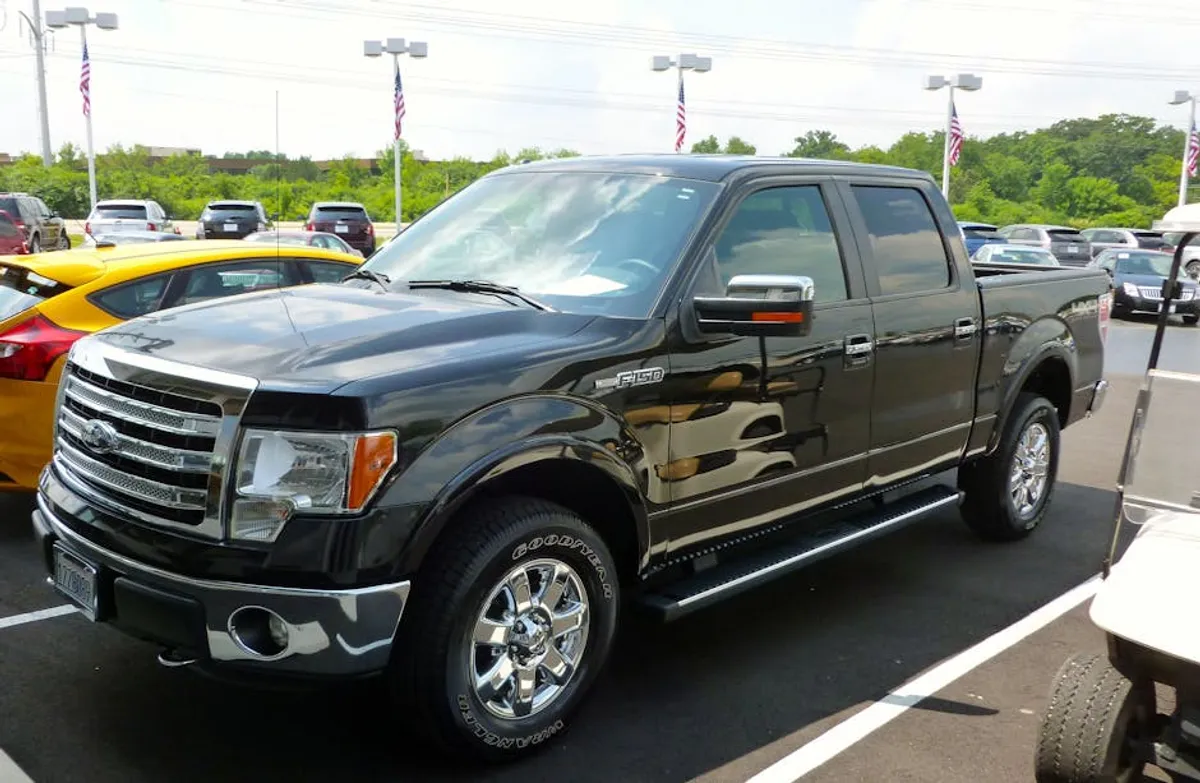
The Ford F-150, particularly with its V8 or EcoBoost V6 options, delivers power through a conventional internal combustion engine (ICE) and multi-speed automatic transmission. This setup provides predictable power curves and established towing capacities, often ranging from 8,200 to 14,000 pounds depending on configuration, with payload capacities typically between 1,700 and 3,300 pounds. The power delivery is linear, with peak torque often available at higher RPMs.
Electric pickup trucks, including the Ford F-150 Lightning and other EV models, utilize electric motors for propulsion. These offer instantaneous torque delivery, meaning maximum pulling power is available from a standstill. This characteristic can make EV trucks feel quicker and more responsive, especially under load. Towing capacities for EV pickups are competitive, with some models matching or exceeding ICE counterparts, such as the F-150 Lightning's max of 10,000 pounds. Payload capacities are also comparable, often ranging from 1,800 to 2,200 pounds for full-size EV trucks. However, towing with an EV significantly impacts range, a factor that requires careful planning.
- ICE F-150:
- Established towing and payload figures (up to 14,000 lbs towing, 3,300 lbs payload).
- Predictable power delivery across RPM range.
- Engine noise and vibration are inherent characteristics.
- EV Pickup Trucks:
- Instantaneous torque for rapid acceleration and strong pulling from a stop.
- Competitive towing and payload figures (up to 10,000 lbs towing, 2,200 lbs payload).
- Quiet operation, reduced vibration.
- Towing significantly impacts driving range.
Fueling and Charging Infrastructure
The ubiquity of gasoline stations provides a significant advantage for ICE F-150 owners. Refueling is a rapid process, typically taking minutes, and the infrastructure is well-established across North America, including remote areas. This minimizes planning for long-distance travel or unexpected detours.
EV pickup trucks rely on a charging infrastructure that is still developing. While public charging networks are expanding, their availability, reliability, and charging speeds vary. Home charging, often via a Level 2 charger, is essential for daily convenience and cost-effectiveness, providing overnight replenishment. DC fast charging stations can significantly reduce charging times on the road, but these are less common than gas stations and can be subject to peak demand pricing or wait times. Planning routes around charging stops is a necessary consideration for EV truck owners, particularly for commercial operations or long-haul trips.
Operating Costs and Maintenance
The operational cost of an ICE F-150 is heavily influenced by fluctuating gasoline prices and average fuel economy, which typically ranges from 17-25 MPG combined. Regular maintenance includes oil changes, spark plug replacements, and transmission fluid services, contributing to ongoing expenses. Parts availability and service expertise are widespread.
EV pickup trucks generally offer lower per-mile fuel costs, as electricity is often cheaper than gasoline, especially when charging at home during off-peak hours. Maintenance requirements are significantly reduced due to fewer moving parts; there are no oil changes, spark plugs, or complex exhaust systems. This translates to lower routine service costs over the vehicle's lifespan. However, potential battery pack replacement, though rare, represents a substantial long-term cost, and specialized EV service expertise may be less common than for ICE vehicles.
Pro Tip: When evaluating total cost of ownership for an EV truck, factor in not just current electricity rates but also the cost of installing a Level 2 home charger. This infrastructure investment is crucial for maximizing convenience and minimizing long-term charging expenses, especially if public fast charging is expensive or unreliable in your operational area.
Purchase Price and Incentives
The initial purchase price of a new Ford F-150 typically ranges from the low $30,000s for base models to over $80,000 for high-trim configurations. These prices are generally stable, with various dealer incentives available.
EV pickup trucks often have a higher initial MSRP compared to similarly equipped ICE counterparts. For example, the F-150 Lightning starts in the high $50,000s and can exceed $90,000 for extended-range versions. However, government incentives, such as federal tax credits (up to $7,500 in the U.S. for eligible vehicles and buyers) and state or local rebates, can significantly offset the purchase price, making EV trucks more competitive. These incentives are subject to change and specific eligibility criteria.
Range and Practicality
A Ford F-150 with a full tank of gasoline typically offers a driving range of 400-700 miles, providing substantial flexibility for long trips without frequent stops. The rapid refueling process means minimal downtime.
EV pickup truck ranges vary, with models like the F-150 Lightning offering an estimated 230-320 miles on a full charge. This range is sufficient for most daily driving and many work applications. However, factors like extreme temperatures, heavy towing, high speeds, and payload significantly reduce effective range. This "range anxiety" necessitates more careful planning for extended journeys or heavy-duty work, as charging stops are longer and less frequent than gas stations.
Best for:
- ICE F-150: Long-distance towing without range concerns, operations in remote areas with limited charging infrastructure, immediate and rapid refueling needs, lower upfront purchase price without incentives.
- EV Pickup Trucks: Daily commutes, local work where range is predictable, operations with access to reliable home or depot charging, lower long-term operating costs, environmental objectives, quieter operation.
Making Your Decision: A Practical Framework
The choice between a Ford F-150 and an EV pickup truck hinges on your specific use case, operational priorities, and access to infrastructure. For businesses with predictable routes and the ability to install dedicated charging infrastructure, an EV truck can offer substantial long-term savings on fuel and maintenance, aligning with sustainability goals. For individuals or fleets requiring maximum flexibility for spontaneous long-haul towing, or operating in regions with sparse charging options, the traditional F-150 remains a robust, proven solution. Consider your average daily mileage, typical payload and towing demands, and the availability of charging points along your most frequent routes.
Frequently Asked Questions
How long does it take to charge an EV truck?
Charging times vary significantly. A Level 1 (120V) household outlet can take days for a full charge. A Level 2 (240V) home charger typically takes 8-12 hours for a full charge. DC fast charging can replenish 10-80% of the battery in 30-60 minutes, depending on the charger's power output and the truck's charging capability.
Are EV trucks good for towing?
Yes, EV trucks excel at towing due to instantaneous torque, which provides strong acceleration and pulling power. However, towing heavy loads significantly reduces the effective driving range, sometimes by 30-50% or more, requiring more frequent charging stops.
What is the typical range of an EV pickup?
Most full-size EV pickup trucks offer an estimated range of 230 to 320 miles on a full charge. This range can be affected by driving conditions, temperature, payload, and towing.
Are EV trucks more expensive to insure?
Insurance costs for EV trucks can be higher due to the higher initial purchase price, specialized components, and potentially higher repair costs for battery packs and advanced technology. However, this varies by insurer and location.