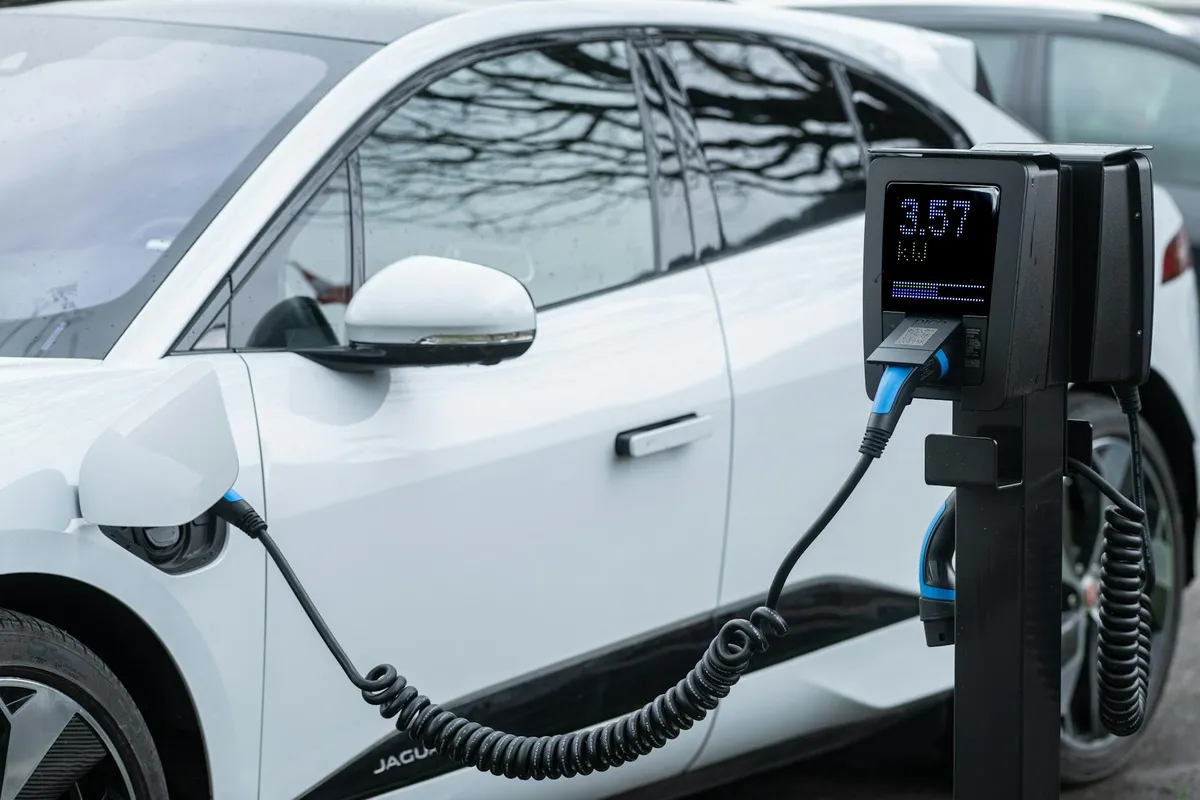
The publicly reported numbers on EV charging infrastructure deployment in the United States have generally tracked upward over the past several years, with successive administration announcements highlighting the cumulative count of charging ports installed, the federal funding deployed through the NEVI program, and the various state-level deployment initiatives. The headline numbers paint a picture of steady infrastructure expansion that, on its surface, supports the case for continued EV adoption growth.
The on-the-ground reality has been complicating that picture for a while now. The gap between announced or installed charging capacity and functional, reliable charging capacity that EV owners can actually depend on for their travel needs has been wider than the headline numbers suggest, and the dynamics behind the gap are worth examining because they affect both the consumer experience of EV ownership and the broader trajectory of the infrastructure buildout.
What the publicly reported numbers actually count
The principal federal data source on public EV charging infrastructure is the Alternative Fuels Data Center maintained by the Department of Energy, which aggregates information from charging network operators, state agencies, and the manufacturers of charging equipment. The data includes counts of charging stations and charging ports, broken out by charging speed category (Level 1, Level 2, DC fast charging), and is updated on an ongoing basis as new installations are reported.
The methodology for inclusion in the database is broadly permissive — installations are generally included once they are physically installed and registered with the database, with the registration generally happening at the point the equipment is commissioned for service. The database represents installed equipment rather than verified operational status, which is the principal source of the reporting gap.
The state-level reporting and the various NEVI program reporting follow similar methodologies in most cases. The reported numbers reflect installed equipment counts, with the operational status of the equipment as a separate question that the headline reporting does not systematically address.
What the on-the-ground reliability data shows
The independent research on the operational reliability of public charging infrastructure has documented a persistent gap between installed and functionally available charging capacity. Studies of large samples of public DC fast charging stations have generally found that meaningful percentages of installed equipment are non-functional at any given time, with the specific percentages varying across charging networks, station ages, and geographic regions.
The reliability research from JD Power, from PlugShare's user-reported data aggregations, from academic studies at several universities, and from the operational data that EV-fleet operators have been compiling for their own logistics planning has consistently shown failure rates in the range of 20 to 30 percent at any given time across the broader public charging network, with substantial variation by network operator and by station age.
The failure modes are varied. Some equipment is completely non-functional due to hardware failures, communication failures with the network operator's back-end systems, or payment processing failures. Some equipment is functional but operating at reduced capability — delivering lower charging speeds than the equipment is specified for, or providing only a subset of the connector types the station is equipped with. Some equipment is occupied by ICE vehicles parked in the charging spaces, which is a logistical rather than equipment failure but which produces the same practical impact on availability.
Why the reliability problem has persisted
The reasons for the persistent reliability gap are several and structural rather than purely operational. The economic model for public charging infrastructure has not consistently supported the kind of operational investment that would be required to maintain high reliability across the deployed equipment base. The revenue per charging session, particularly at lower-utilization stations, has often been insufficient to fund the field service operations that high reliability requires.
The technical complexity of the charging equipment has contributed to the reliability challenges. DC fast charging equipment in particular involves substantial electronic systems, communication protocols, and integration with vehicle-side systems that have continued to evolve. The compatibility issues between specific charging equipment versions and specific vehicle model years have produced operational issues that take time to identify and address.
The network-operator landscape has been characterized by rapid change, with charging network operators entering and exiting the business, merging, and reorganizing their station portfolios in ways that have sometimes created discontinuities in the operational management of specific stations. The transition periods have sometimes coincided with degraded reliability for stations during the transitions.
What the NEVI program has actually delivered
The NEVI program — the National Electric Vehicle Infrastructure formula program established under the Bipartisan Infrastructure Law — has been the principal federal funding mechanism for highway-corridor EV charging deployment. The program provides federal funding to states for the deployment of DC fast charging stations along the designated alternative fuel corridor network, with specific requirements about station configuration, reliability, and accessibility.
The deployment under NEVI has been slower than the original program timeline projected. The implementation involves multiple stages — state planning documents, project solicitation, project award, project construction, and project commissioning — and each stage has involved its own implementation friction. The first operational NEVI-funded stations came online in late 2023 and 2024, well behind the original projected schedule.
The reliability requirements that NEVI imposes on funded stations are substantially more stringent than the historical baseline for the public charging network. The requirements include uptime standards, specific operational specifications, and ongoing reporting requirements that are intended to address the reliability problems that have characterized earlier charging deployment. The early operational data on NEVI-funded stations suggests that the requirements are producing better reliability than the broader network, but the sample size remains limited and the long-term reliability of the funded stations remains to be demonstrated.
What the OEM-network and Tesla deployment looks like
The Tesla Supercharger network has been the most reliable major DC fast charging network in the U.S. market by a substantial margin throughout the period the public networks have been working through their reliability challenges. The reliability advantage has reflected the integrated approach Tesla has taken to the deployment — proprietary equipment with consistent technical specifications, network operation under direct Tesla management, and the integration of the charging network with the vehicle ecosystem that allows tighter operational management than the third-party network model supports.
The opening of the Tesla Supercharger network to non-Tesla vehicles through the NACS connector adoption has been one of the more substantive developments in the charging infrastructure picture over the past two years. The major non-Tesla OEMs have announced adoption of the NACS connector for their North American EV products, with the transition rolling through new-vehicle production over the next several years.
The practical effect for consumers has been complicated by the transition mechanics. The adapter solutions that allow current non-Tesla EVs to use the Supercharger network have been rolling out gradually, with specific OEM partnerships establishing the access conditions for specific vehicle models. The full integration that the announced transition projects is still developing, but the trajectory is toward broader EV access to what has been the most reliable charging network in the U.S. market.
What the next several years probably look like
The charging infrastructure buildout will probably continue at increasing pace as NEVI-funded deployment moves through its implementation phases, as the OEM-network integration with the Tesla Supercharger network expands, and as the various private investment in charging deployment proceeds. The headline numbers on installed capacity will probably continue to grow at the kind of rates the publicly reported data has been showing.
The reliability question will be the more important practical metric for understanding how the buildout actually affects consumer EV ownership experience. The NEVI reliability requirements, the network-operator consolidation that has been working through the industry, and the integration with the more reliable OEM-network capacity will probably move the aggregate reliability of the deployed network upward over time. The pace of that improvement, and whether it keeps pace with EV adoption growth, will be the question that determines how the consumer experience of public charging actually evolves.
The reporting on the infrastructure deployment will probably need to evolve to focus more on the functional reliability metrics rather than the simple installed-capacity counts. The current public reporting framework was designed for an earlier phase of the buildout where installed capacity was the binding constraint. The current phase is increasingly characterized by reliability rather than raw capacity as the binding constraint on consumer experience, and the public conversation about infrastructure status would benefit from better data on the metric that actually matters at this point in the development.
The infrastructure buildout that is happening is real and is meaningful. The gap between installed capacity and functional capacity is also real and is meaningful. Both can be true simultaneously, and both deserve more careful treatment in the public conversation about EV infrastructure than the headline numbers tend to provide.