Choosing a family SUV for road trips involves more than just seating capacity; it requires evaluating a vehicle's long-haul comfort, cargo flexibility, and integrated technology. The ideal road trip SUV combines reliable performance with amenities that keep passengers content over hundreds, or even thousands, of miles. This guide focuses on models that consistently deliver on these fronts, offering specific insights into their strengths and limitations for extended travel.
Key Considerations for Road Trip SUVs
Before committing to a specific model, assess these critical factors to ensure the SUV aligns with your family's road trip demands:
- Seating Comfort and Configuration: Evaluate second and third-row legroom, head clearance, and seat adjustability. Look for features like sliding second-row seats, recline functions, and optional captain's chairs for easier access and enhanced comfort, especially on long drives.
- Cargo Capacity and Versatility: Consider the cargo volume behind the third row for luggage, and the maximum cargo space with seats folded for larger items. Flat-folding seats, under-floor storage, and roof rail options significantly expand utility.
- Fuel Economy: For extended travel, higher MPG figures translate directly to lower operating costs and fewer fuel stops. Compare EPA estimates for highway driving and consider hybrid or diesel options if available.
- Safety Features: Prioritize SUVs with comprehensive advanced driver-assistance systems (ADAS) as standard. Adaptive cruise control, lane-keeping assist, blind-spot monitoring, and automatic emergency braking reduce driver fatigue and enhance safety on highways.
- Infotainment and Connectivity: A robust infotainment system with large screens, multiple USB ports (including USB-C), wireless Apple CarPlay/Android Auto, and optional rear-seat entertainment systems can significantly improve passenger experience. Wi-Fi hotspots are also valuable.
- Ride Quality and Noise Isolation: A smooth, composed ride that absorbs road imperfections well, combined with effective cabin sound deadening, is crucial for reducing fatigue and allowing conversation or sleep.
- Towing Capability: If your road trips involve hauling a small camper, boat, or utility trailer, ensure the SUV's towing capacity meets your requirements. Factor in the gross vehicle weight rating (GVWR) and tongue weight.
- Reliability and Maintenance: Research long-term reliability ratings and the availability of service centers, especially if venturing into less populated areas. Lower maintenance costs over time contribute to overall road trip enjoyment.
1. Honda Pilot
The Honda Pilot stands out for its practical, family-centric design and consistent reliability. It provides a spacious interior with easy third-row access, making it a strong contender for families needing ample room without opting for a full-size SUV. Its V6 engine delivers adequate power for highway cruising and light towing, while a well-tuned suspension offers a comfortable, composed ride over varied road surfaces.
Best for: Families prioritizing passenger space, intuitive technology, and Honda's reputation for dependability on long journeys.
Pros:
- Generous passenger volume across all three rows, particularly in the second row.
- User-friendly infotainment system with standard Apple CarPlay and Android Auto.
- Standard Honda Sensing suite provides a comprehensive array of safety features.
- Smooth V6 engine offers a good balance of power and efficiency for its class.
Cons:
- Third-row cargo space is somewhat limited compared to larger rivals.
- Fuel economy, while competitive, doesn't lead the segment.
- Interior design, while functional, lacks the premium feel of some competitors.
Verdict: The Pilot is a highly competent and reliable choice for families seeking a practical, comfortable, and safe road trip vehicle that won't surprise them with unexpected issues.
2. Kia Telluride
The Kia Telluride quickly established itself as a benchmark for family SUVs, blending sophisticated styling with an exceptionally well-appointed interior. Its spacious cabin comfortably accommodates seven or eight passengers, offering a near-luxury experience at a mainstream price point. The ride quality is refined, and the V6 engine provides smooth acceleration, making it well-suited for extended highway travel.
Best for: Families seeking a premium feel, extensive standard features, and a comfortable, quiet cabin for long-distance trips without a luxury price tag.
Pros:
- Upscale interior design and high-quality materials throughout the cabin.
- Standard V6 engine provides robust power and smooth delivery.
- Extensive list of standard and available technology and safety features.
- Comfortable seating in all three rows, with good third-row access.
Cons:
- Fuel economy is average for the segment.
- No hybrid or more fuel-efficient powertrain option available.
- Some advanced features are tied to higher trim levels.
Verdict: The Telluride delivers an impressive blend of style, comfort, and value, making it an outstanding choice for families who want a premium road trip experience without the premium cost.
3. Hyundai Palisade
Sharing its platform with the Kia Telluride, the Hyundai Palisade offers a similarly compelling package with its own distinct aesthetic. It provides a luxurious and quiet interior, ample passenger space, and a comprehensive suite of technology and safety features. The Palisade excels in ride comfort, absorbing road imperfections effectively, which is critical for minimizing fatigue on long drives.
Best for: Families desiring a refined, feature-rich, and comfortable SUV that offers excellent value and a strong warranty for peace of mind on long trips.
Pros:
- Elegant interior design with premium materials and thoughtful amenities.
- Smooth V6 engine and a comfortable, composed ride.
- Extensive standard safety features, including advanced driver aids.
- Intuitive infotainment system with large displays and multiple connectivity options.
Cons:
- Similar to the Telluride, fuel economy is competitive but not class-leading.
- Cargo space behind the third row is adequate but not exceptional.
- The exterior styling might not appeal to everyone compared to its sibling.
Verdict: The Palisade is a sophisticated and highly capable road trip SUV, offering a near-luxury experience and a generous warranty, making it a smart choice for discerning families.
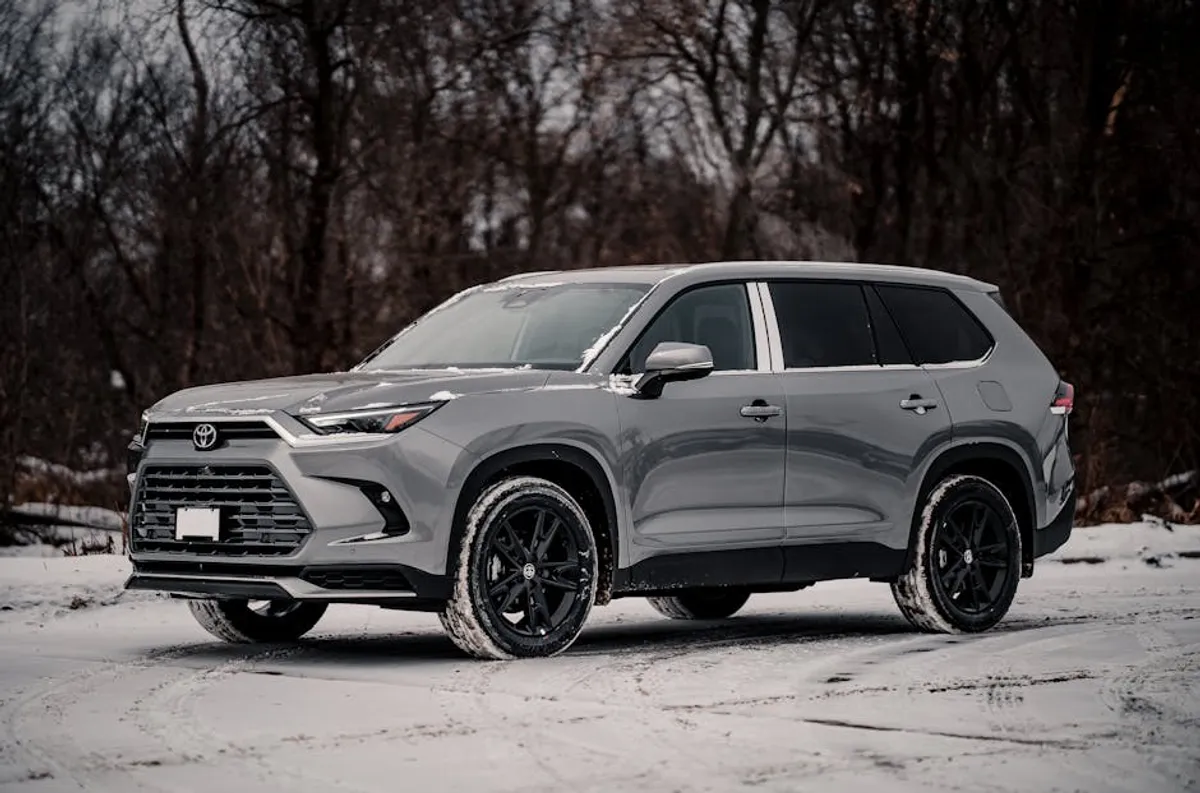
4. Toyota Highlander
The Toyota Highlander has long been a staple in the family SUV segment, known for its unwavering reliability, strong resale value, and practical design. While its third row is best suited for children, the Highlander offers a comfortable and fuel-efficient hybrid option that significantly reduces running costs on long hauls. Its ride quality is smooth, and the cabin is well-insulated, contributing to a relaxed travel experience.
Best for: Families prioritizing long-term reliability, strong resale value, and exceptional fuel economy (especially with the hybrid powertrain) for consistent road trip use.
Pros:
- Outstanding reputation for reliability and durability.
- Available hybrid powertrain offers segment-leading fuel efficiency.
- Smooth and quiet ride, conducive to long-distance comfort.
- Comprehensive suite of standard safety features (Toyota Safety Sense).
Cons:
- Third-row seating is more cramped than in some competitors.
- Cargo space behind the third row is limited.
- Infotainment system, while functional, can feel less modern than rivals.
Verdict: The Highlander remains a top choice for its pragmatic approach to family travel, offering peace of mind through its reliability and the significant cost savings of its hybrid variant.
5. Chevrolet Tahoe / Suburban
For families requiring maximum space, towing capacity, and rugged capability, the Chevrolet Tahoe and its extended-wheelbase sibling, the Suburban, are unmatched in the mainstream segment. These full-size SUVs offer cavernous interiors, comfortable seating for up to nine, and substantial cargo volume, even with all seats occupied. Their robust body-on-frame construction provides a commanding road presence and excellent towing prowess.
Best for: Large families, those needing significant cargo space with all rows in use, or anyone regularly towing heavy loads on road trips.
Pros:
- Class-leading passenger and cargo space, especially in the Suburban.
- High towing capacity suitable for large trailers or boats.
- Available diesel engine option offers impressive torque and fuel economy.
- Comfortable ride, especially with optional adaptive air suspension.
Cons:
- Large exterior dimensions can make maneuvering and parking challenging.
- Fuel economy for gasoline engines is notably lower than unibody SUVs.
- Higher purchase price and running costs compared to mid-size options.
Verdict: The Tahoe and Suburban are the definitive choice for families whose road trip needs demand maximum space, power, and towing capability, accepting the trade-offs in maneuverability and fuel efficiency.
6. Ford Expedition
The Ford Expedition, particularly the extended-length Expedition Max, offers a compelling alternative to the GM full-size SUVs. Powered by a potent EcoBoost V6 engine, it delivers strong acceleration and impressive towing capacity. Its independent rear suspension contributes to a more refined ride and better handling than some body-on-frame rivals, enhancing comfort on long highway stretches. The interior is spacious, with a genuinely usable third row and ample cargo room.
Best for: Families needing robust towing capabilities and generous passenger/cargo space, but preferring a more car-like ride quality than traditional body-on-frame SUVs.
Pros:
- Powerful EcoBoost V6 engine provides strong performance and towing.
- Spacious and comfortable interior with a genuinely adult-friendly third row.
- Independent rear suspension contributes to a smooth ride and confident handling.
- Generous cargo space, especially in the Expedition Max variant.
Cons:
- Fuel economy is a significant consideration, particularly for the standard wheelbase.
- Large footprint can be cumbersome in urban environments.
- Interior design, while functional, can feel less luxurious than some competitors.
Verdict: The Expedition is an excellent choice for families seeking a full-size SUV that balances impressive capability with a comfortable and refined driving experience for long road trips.
7. Subaru Ascent
The Subaru Ascent brings the brand's signature all-wheel-drive capability and strong safety credentials to the three-row SUV segment. It offers a comfortable ride, a spacious cabin with good visibility, and a practical approach to family travel. The standard symmetrical all-wheel drive provides confidence in varying weather conditions, a significant advantage for road trips that might encounter snow or rain.
Best for: Families seeking a safe, reliable, and comfortable three-row SUV with standard all-wheel drive for confident travel in diverse climates and light off-road excursions.
Pros:
- Standard Symmetrical All-Wheel Drive for enhanced traction and safety.
- Excellent safety ratings and a comprehensive suite of EyeSight driver-assist features.
- Comfortable ride and good outward visibility.
- Spacious second and third rows, especially with captain's chairs.
Cons:
- Turbocharged four-cylinder engine can feel strained under heavy load.
- Fuel economy is average for its class.
- Infotainment system can be less intuitive than some rivals.
Verdict: The Ascent is a solid, dependable choice for families prioritizing safety and all-weather capability, offering a comfortable and practical platform for road trips.
8. Volkswagen Atlas
The Volkswagen Atlas distinguishes itself with an enormous interior, offering perhaps the most spacious third row in its class, capable of accommodating adults comfortably. Its straightforward, functional design prioritizes usability and visibility. The ride is composed and comfortable, and while not the most powerful, its available V6 engine provides sufficient motivation for highway speeds, making it a pragmatic choice for family road trips.
Best for: Families requiring maximum passenger space, especially for older children or adults in the third row, and a user-friendly, practical cabin for long journeys.
Pros:
- Class-leading third-row passenger space and easy access.
- Large cargo volume, even with the third row in use.
- Intuitive infotainment system and straightforward controls.
- Comfortable ride and good outward visibility.
Cons:
- Neither the four-cylinder nor V6 engine offers particularly strong acceleration.
- Fuel economy is competitive but not class-leading.
- Interior materials, while durable, can feel less premium than some rivals.
Verdict: The Atlas is an excellent, no-nonsense choice for families prioritizing interior volume and comfort for all passengers, making it a highly practical road trip companion.
9. Mazda CX-90
The Mazda CX-90 represents Mazda's entry into the larger three-row SUV segment, replacing the CX-9. It delivers a premium driving experience with refined handling and powerful, efficient inline-six engine options, including a mild-hybrid. The interior boasts upscale materials and a driver-focused cockpit, providing a more engaging and comfortable experience for the driver while still offering adequate space for passengers.
Best for: Families seeking a more engaging driving experience, premium interior, and efficient inline-six powertrains, willing to trade some ultimate third-row space for driver enjoyment.
Pros:
- Engaging driving dynamics and refined handling for an SUV of its size.
- Powerful and efficient mild-hybrid inline-six engine options.
- Upscale interior design and high-quality materials.
- Strong safety features and good crash test performance.
Cons:
- Third-row seating is less spacious than some direct competitors.
- Cargo space is competitive but not class-leading.
- Infotainment system can be distracting to operate while driving due to rotary controller focus.
Verdict: The CX-90 offers a distinct proposition for families who appreciate driving dynamics and a luxurious cabin, providing a more premium and enjoyable road trip experience from the driver's seat.
10. Jeep Grand Cherokee L
The Jeep Grand Cherokee L extends the iconic Grand Cherokee nameplate into the three-row segment, offering a blend of rugged capability, luxurious appointments, and a comfortable ride. It retains Jeep's off-road heritage while significantly enhancing on-road refinement and interior technology. The available air suspension contributes to a plush ride, making it well-suited for long highway stretches, and its strong V6 and V8 engine options ensure ample power.
Best for: Families who desire a premium, capable SUV that can comfortably handle long road trips and occasional light off-road adventures.
Pros:
- Upscale interior with high-quality materials and advanced technology.
- Comfortable and composed ride, especially with optional air suspension.
- Strong V6 and available V8 engine options provide ample power.
- Retains Jeep's off-road capability for adventurous families.
Cons:
- Fuel economy, particularly with the V8, is not competitive.
- Third-row space is adequate for children but tighter for adults.
- Higher starting price than many mainstream three-row SUVs.
Verdict: The Grand Cherokee L is a compelling choice for families seeking a premium, capable, and comfortable road trip SUV that can transition seamlessly from highway cruising to more adventurous terrain.
11. Nissan Pathfinder
The Nissan Pathfinder returned with a significant redesign, re-emphasizing its family-friendly credentials. It offers a robust V6 engine, a conventional automatic transmission (replacing the CVT), and a spacious, well-appointed interior. The Pathfinder excels in providing easy access to the third row thanks to its EZ FLEX seating system, making it highly practical for families with varying passenger needs on road trips.
Best for: Families seeking a practical, comfortable, and reliable three-row SUV with easy third-row access and a strong V6 powertrain for confident highway travel.
Pros:
- Strong V6 engine paired with a smooth nine-speed automatic transmission.
- Easy third-row access with the EZ FLEX seating system.
- Comfortable ride and intuitive technology features.
- Standard Nissan Safety Shield 360 offers comprehensive driver assistance.
Cons:
- Fuel economy is average for the segment.
- Interior design, while functional, lacks the flair of some competitors.
- Not as engaging to drive as some rivals.
Verdict: The Pathfinder is a highly competent and practical road trip SUV, offering a strong powertrain, comfortable interior, and user-friendly features that make long journeys less stressful for families.
12. Volvo XC90
The Volvo XC90 stands as a benchmark for safety, elegant design, and sophisticated comfort in the luxury three-row SUV segment. Its serene cabin, high-quality materials, and advanced technology create an exceptionally pleasant environment for long journeys. The XC90's powertrains, including mild-hybrid and plug-in hybrid options, offer a balance of performance and efficiency, while its ride quality is consistently smooth and refined.
Best for: Families prioritizing unparalleled safety, sophisticated Scandinavian design, luxurious comfort, and advanced technology for premium road trip experiences.
Pros:
- Industry-leading safety features and crash test performance.
- Elegant and minimalist interior design with premium materials.
- Comfortable and supportive seating in all three rows.
- Available plug-in hybrid (Recharge) offers significant power and efficiency.
Cons:
- Higher purchase price and maintenance costs typical of luxury vehicles.
- Infotainment system can have a learning curve.
- Third-row space is adequate for children but less generous than some larger SUVs.
Verdict: The XC90 offers a compelling blend of safety, luxury, and comfort, making it an ideal choice for families who seek a refined and secure road trip experience and are willing to invest in a premium vehicle.
Choosing the Right Road Trip SUV for Your Family
Selecting the best family SUV for road trips is a highly personal decision, contingent on your specific needs and priorities. Start by accurately assessing the number of passengers you'll regularly transport and their ages, as this dictates required third-row space. Consider your typical luggage volume and any recreational gear that needs to be accommodated. If towing is a factor, ensure the SUV's capacity exceeds your needs with a comfortable buffer. Test drive your top contenders on varied road surfaces, including highway speeds, to evaluate ride comfort, cabin noise, and driver ergonomics. Pay close attention to the infotainment system's ease of use and the availability of charging ports. Finally, factor in long-term ownership costs, including fuel efficiency, insurance, and projected maintenance, to ensure the vehicle remains a sustainable choice for your family's adventures.
Frequently Asked Questions About Family Road Trip SUVs
What are the most important features for a family road trip SUV?
Key features include comfortable and spacious seating (especially in the second and third rows), ample cargo capacity, strong fuel economy (or a hybrid option), comprehensive safety features like adaptive cruise control and lane-keeping assist, and a user-friendly infotainment system with multiple charging ports.
Is a hybrid SUV worth it for long road trips?
Yes, a hybrid SUV can be highly beneficial for long road trips. While the primary fuel economy gains are often seen in city driving, the improved highway MPG over non-hybrid counterparts can lead to significant fuel savings over thousands of miles. It also reduces the frequency of fuel stops, which can be a convenience on extended journeys.
How much cargo space do I need for a family road trip?
The ideal cargo space depends on the length of your trip and the number of passengers. For a family of four to five on a week-long trip, aim for at least 20-25 cubic feet behind the third row if you plan to use all seats, or 40+ cubic feet with the third row folded. Larger families or longer trips may require 30+ cubic feet behind the third row or a full-size SUV's capacity.
What safety features are essential for a road trip SUV?
Essential safety features include adaptive cruise control (to maintain safe distances), lane-keeping assist (to prevent unintentional lane departure), blind-spot monitoring, rear cross-traffic alert, and automatic emergency braking. These systems reduce driver fatigue and enhance overall safety on highways.
Should I get captain's chairs or a bench seat in the second row?
Captain's chairs (two individual seats) offer more comfort and easier access to the third row, which is ideal for older children or adults. They also provide a clear aisle between seats, reducing sibling squabbles. A bench seat (three-across seating) maximizes passenger capacity, allowing you to carry an extra person, but can make third-row access more difficult.